
Sous Vide Flank Steak
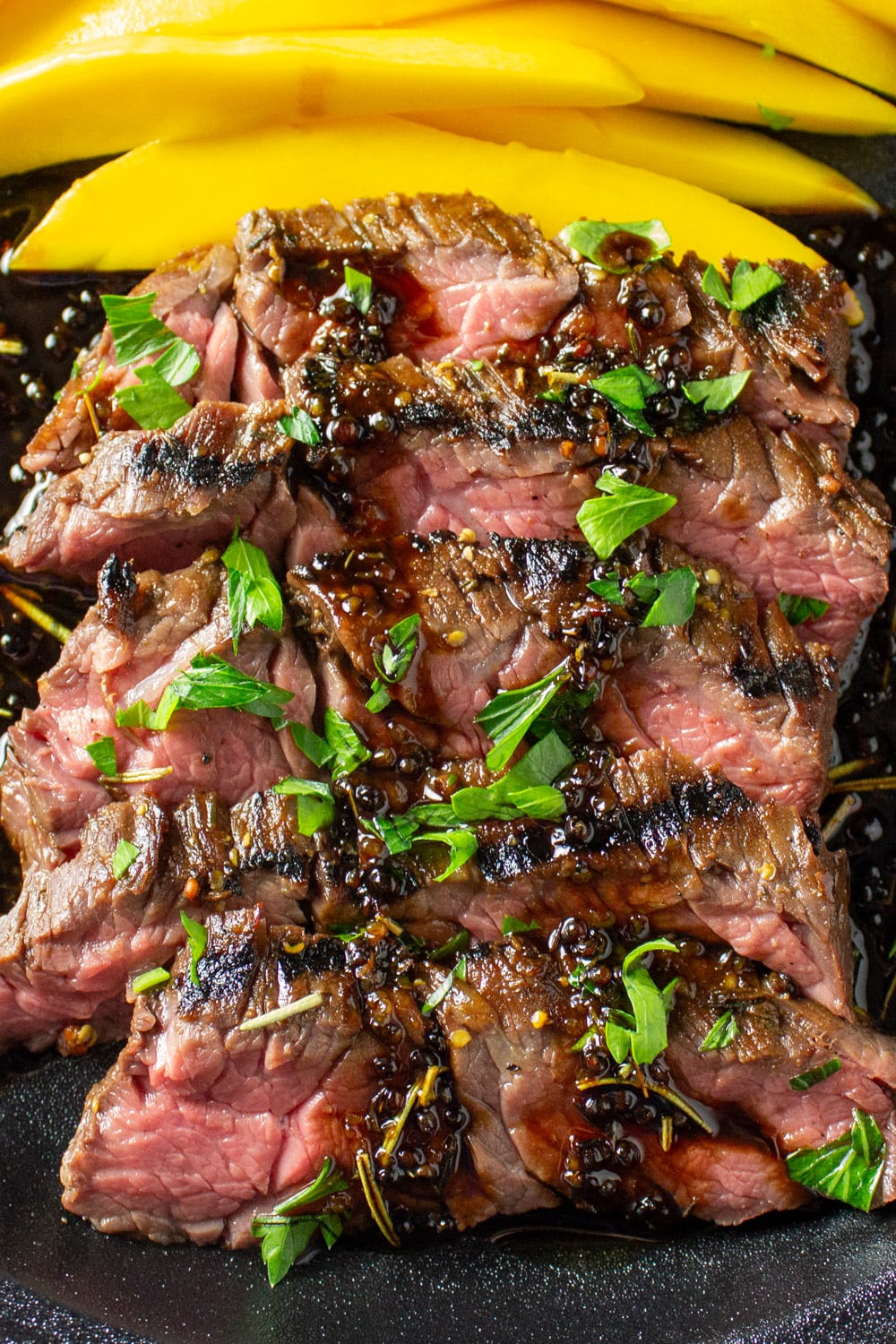
Sous vide flank steak turns this lean cut into tender, juicy steak cooked perfectly edge to edge. Finished with a rich balsamic glaze, it’s an easy dinner for weeknights or entertaining.
One surprise from testing this recipe? Even very thin flank steak worked beautifully with the sous vide method.
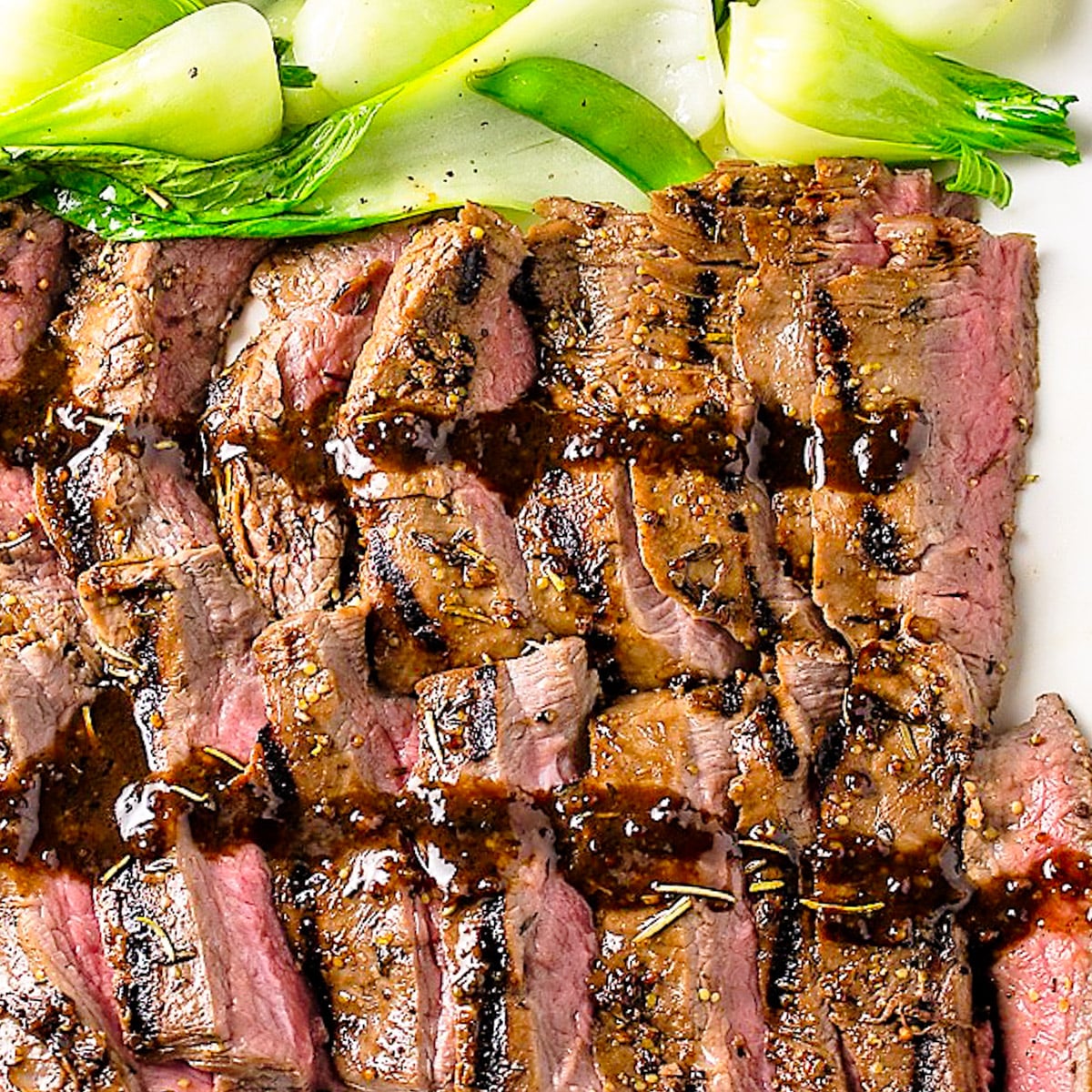
What to expect
The flank steak texture and doneness:
- The sous vide method does wonders for flank steak, cooking it exactly to your preferred temperature and texture. I like it medium-rare, but other temperature options are included below.
- We tested both thin and thicker flank steak cuts – both were excellent.
The marinade:
- The balsamic marinade and glaze add great flavor with very little effort.
- Use the glaze before grilling, after grilling, or drizzle it over the sliced steak before serving.
The process:
- Similar to other sous vide beef recipes, you will heat a water bath based on the doneness you choose, place it in a sous vide or zip-top bag, then submerge the bag.
- Timing is based on the thickness of the meat.
- After the sous vide cook, you will do a quick sear for extra color and flavor.
Ingredients – tailored to your taste
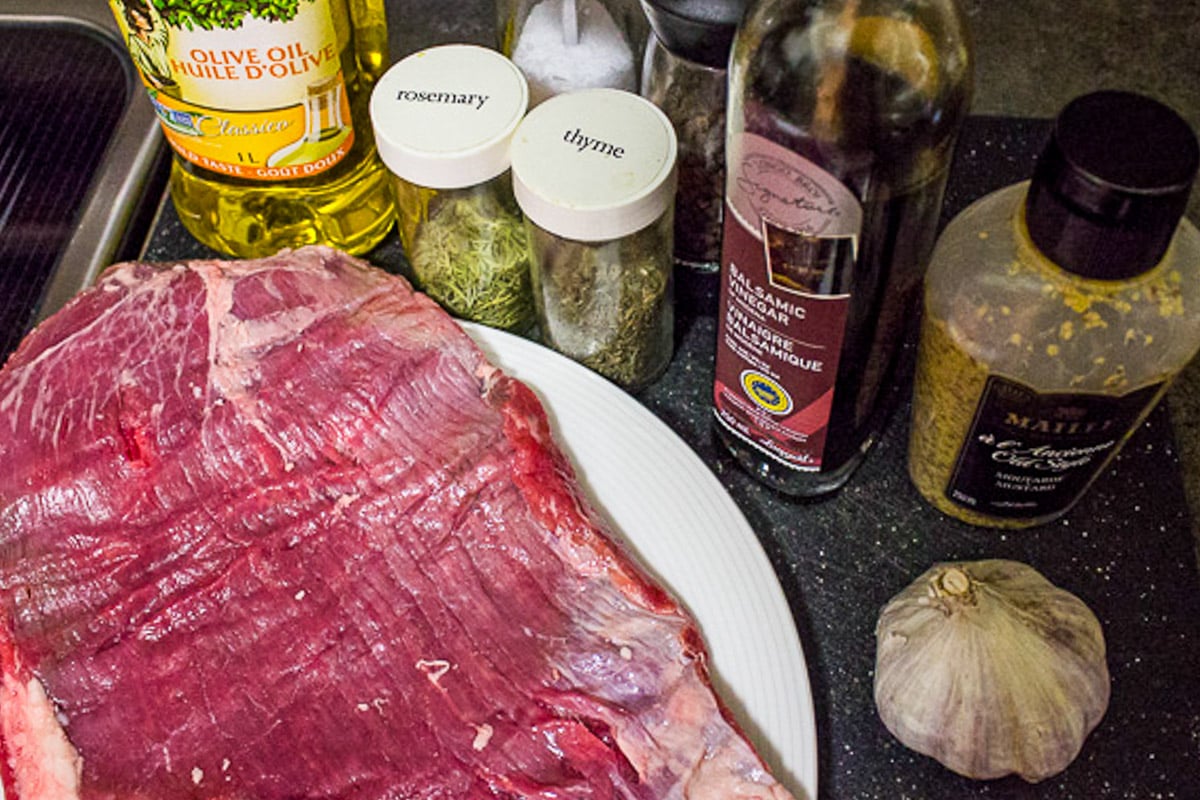
- Flank steak: Prime, Choice, AAA, or Angus cuts will be the most tender, but sous vide will make less expensive cuts very tender with a little more cook time. We tested thin steaks (1/2 inch/1.3 cm) and thicker ones (1-1 1/2 inches/2.5-3.8 cm) – both worked well with adjusted cook times.
- Marinade/glaze: includes a good-quality balsamic vinegar, grainy mustard, garlic, olive oil, dried rosemary, and thyme. Half is used to marinate the meat. The rest is reduced into a glaze for brushing or drizzling before serving.
Substitutions
- Instead of grainy mustard, use Dijon.
- Swap the dried herbs with fresh herbs (use 2x for rosemary and 3x for thyme)
- Replace the balsamic vinegar with red wine vinegar or apple cider vinegar sweetened with a bit of sugar or maple syrup.
Variations
- Skip the glaze and slice the flank steak for fajitas, sandwiches or tacos.
- Use your favorite marinade/glaze instead of the one in the recipe, but avoid fresh onions and garlic during the sous vide cook, as they can become harsh.
Time and Temperature
I sous vide the flank steak at 132F (56C) for medium-rare for 3 hours. It produces tender, juicy steak with a warm pink center.
Here are other good options for a typical 1-1 1/2 inch (2.5-3.8 cm) flank steak, depending on your preferred doneness and texture:
| Desired Doneness | Temperature | Texture and Color | Timing |
|---|---|---|---|
| Rare | 125-129F (52-54C) | Very soft texture with a red center | 2-4 hours |
| Medium-rare (recommended) | 130-135F (54-57C) | Tender and juicy with a warm pink center | 2-4 hours |
| Medium | 136-140F (58-60C) | Firmer texture with a pink center | 2-4 hours |
- For thinner flank steaks (about 1/2 inch / 1.3 cm thick), reduce the cook time to about 1 1/2 to 2 hours.
- Longer cook times will further tenderize flank steak (and should be used for lower quality meat), but the texture becomes too soft over time. I wouldn’t recommend more than 4 hours.
Step-by-step instructions
Shortcut
Skip the 4 to 24-hour marinating step. The flavor won’t be quite as deep, but the glaze will add extra flavor.
What to serve with flank steak
Sous vide flank steak pairs well with simple sides that balance the rich, glazed meat. Here are some favorites.
- Crispy roasted potatoes
- Thai mango salad
- Baked cauliflower with cheese
- Rice with veggies (Instant Pot)
- Lemon orzo salad with grilled vegetables
- Mandarin orange salad
The sliced steak is also excellent in tacos, sandwiches, rice bowls, or fajitas.
Recipe FAQs
Yes. We tested both very thin flank steak (about 1/2 inch / 1.3 cm thick) and thicker cuts, and both worked well with sous vide cooking. Thin flank steak simply needs less cook time – about 1 1/2 to 2 hours. For very thin flank steak, a quick sear on one side may be enough.
Yes. Some cooks prefer not to marinate meat before sous vide cooking, but we found the marinade added excellent flavor without negatively affecting the texture. Pat the meat dry lightly before bagging and cooking sous vide.
Because flank steak is relatively thin, it can overcook quickly during searing. Pat the steak very dry before grilling or searing, and use very high heat for a quick finish. To be safe, grill on one side only. Or, for a darker crust, chill the cooked steak briefly in an ice bath before searing.
Yes. Cook the flank steak sous vide, then immediately chill the sealed bag in an ice bath for about 20-30 minutes before refrigerating. When ready to serve, sear or grill the steak for a couple of minutes per side and drizzle with the glaze.
Yes. Once cooked, immediately chill the sealed bag in an ice bath (half ice, half water) for 30-40 minutes before freezing for safety reasons. Freeze for up to 6 months. To reheat, drop the frozen bag into a water bath set to 130F/54C for about an hour. Then pat dry, season, and sear on a hot grill or pan for 2 minutes.
More recipes to try
If you’re new to sous vide cooking, check out our guide to sous vide recipes and tips for help with setup, timing, temperatures, and finishing techniques.
And if you love flank steak but don’t have sous vide equipment, try our marinated flank steak
If you make this recipe, let us know how it went! A rating & comment below mean a lot to us.
Sous Vide Flank Steak
Equipment
- Sous Vide equipment
Ingredients
- 1 1/4 pounds flank steak, Note 1
- kosher salt and black pepper
Marinade and Glaze
- 3 tablespoons olive oil
- 1/4 cup balsamic vinegar, Note 2 (good quality)
- 1 tablespoon grainy old fashioned mustard (or Dijon)
- 1/4 teaspoon garlic powder
- 1 teaspoon dried rosemary (or 2 tsp fresh, chopped)
- 1 teaspoon dried thyme (or 3 tsp fresh, chopped)
Instructions
- HEAT THE WATER IN SOUS VIDE MACHINE: Heat the sous vide water bath to 132°F (56°C) for medium-rare, or to your preferred temperature (Note 3).
- MAKE MARINADE/GLAZE: In a small saucepan, combine olive oil, balsamic vinegar, mustard, garlic powder, rosemary, and thyme. Pour half the mixture into a large zip-top bag or container for marinating the steak. Reserve the remaining half in the saucepan for the glaze.
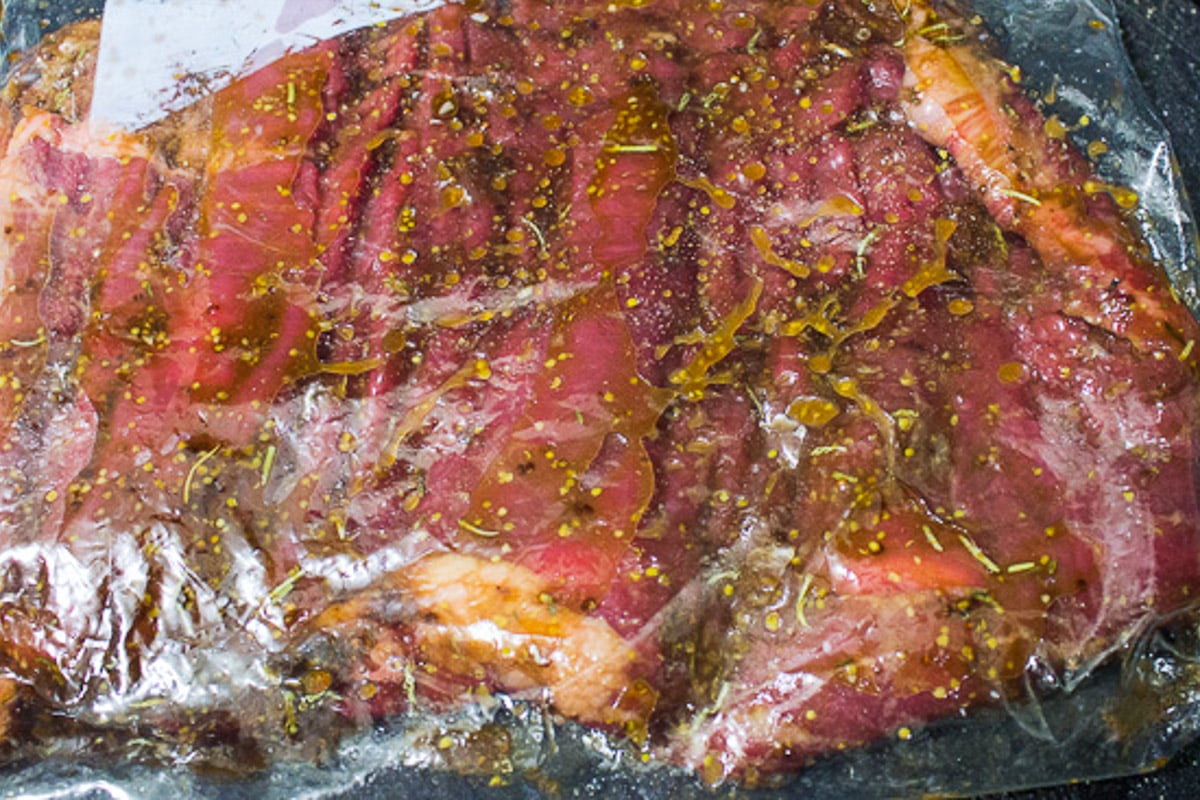
- MARINATE FLANK STEAK: Season the flank steak with salt and pepper. Poke it all over with a small sharp knife to let the marinade seep in. Add it to the marinade and coat well. Marinate for 4-6 hours or overnight. If you don't have time, skip this step.
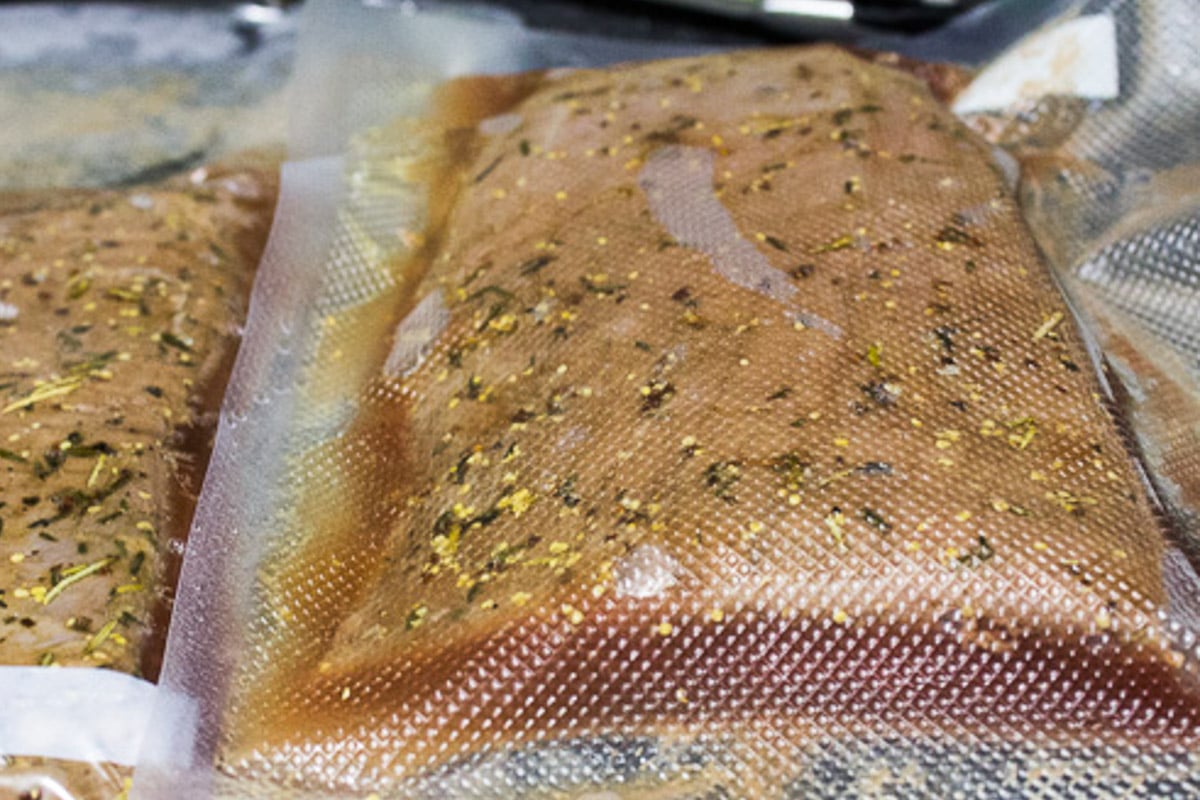
- SEAL FLANK IN BAG: Remove the steak from the marinade and lightly pat off excess moisture.one vacuum seal bag. Cut flank steak in half if too large for bag. Place the steak in a sous vide bag and seal using your preferred method (Note 4 for vacuum seal and water displacement instructions).
- SOUS VIDE FLANK STEAK: Cook the steak in the water bath for: ° 1 1/2 to 2 hours for thinner steaks (about 1/2 inch thick) or ° 2 to 4 hours for thicker steaks (I often choose 3 – 3.5 hours)
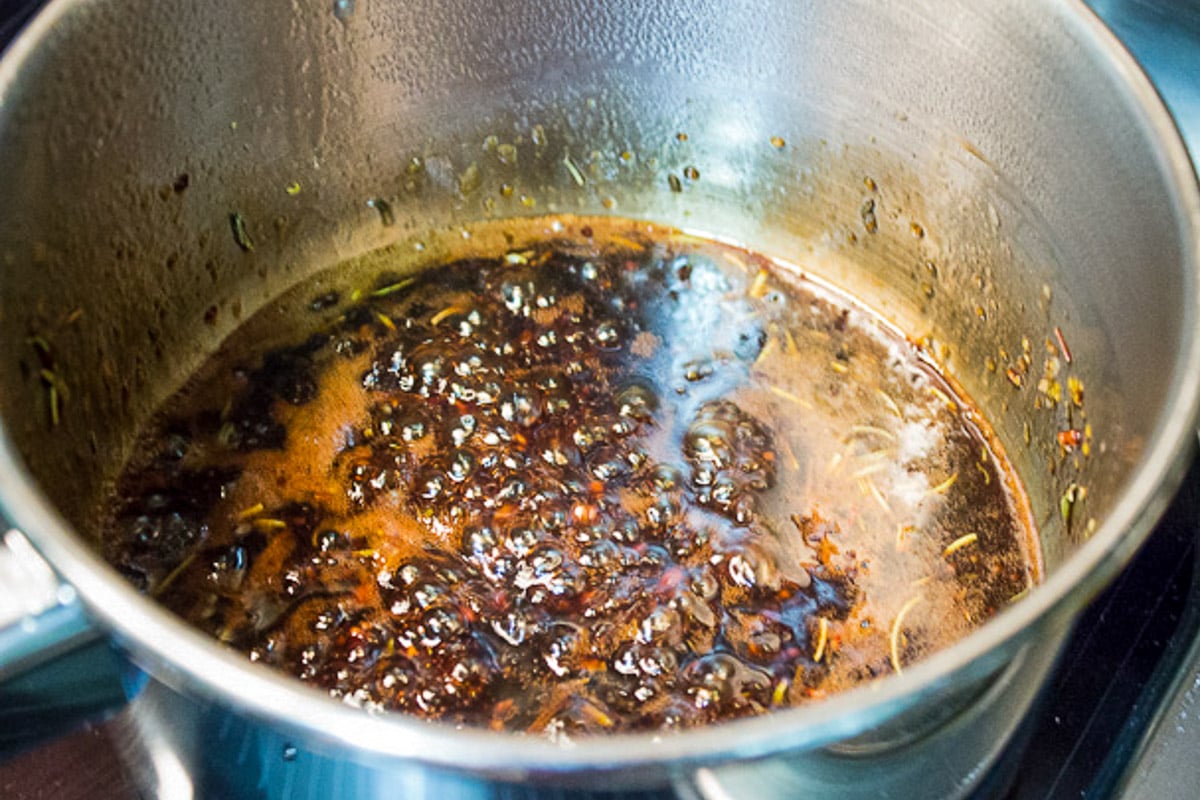
- MAKE GLAZE: While flank steak is cooking, bring reserved marinade in saucepan to a boil, lower heat to medium and cook until reduced until slightly thickened and glossy enough to coat the back of a spoon.
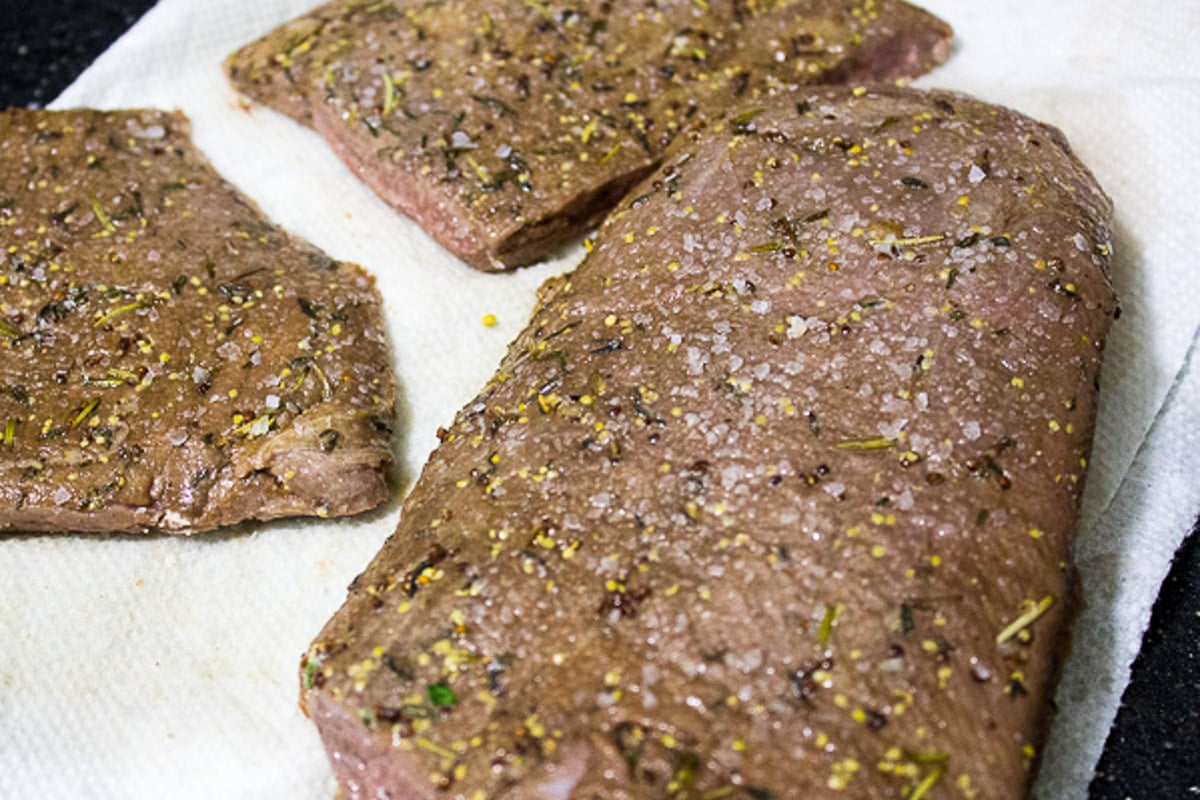
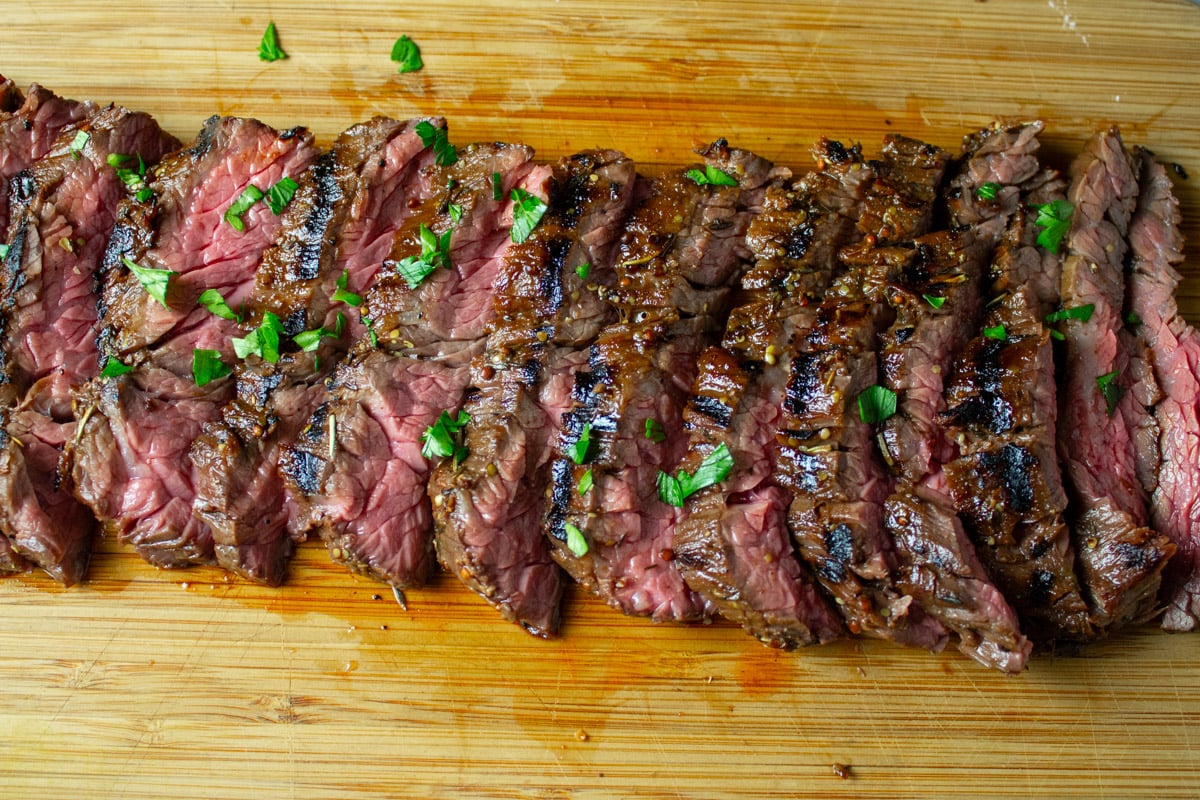
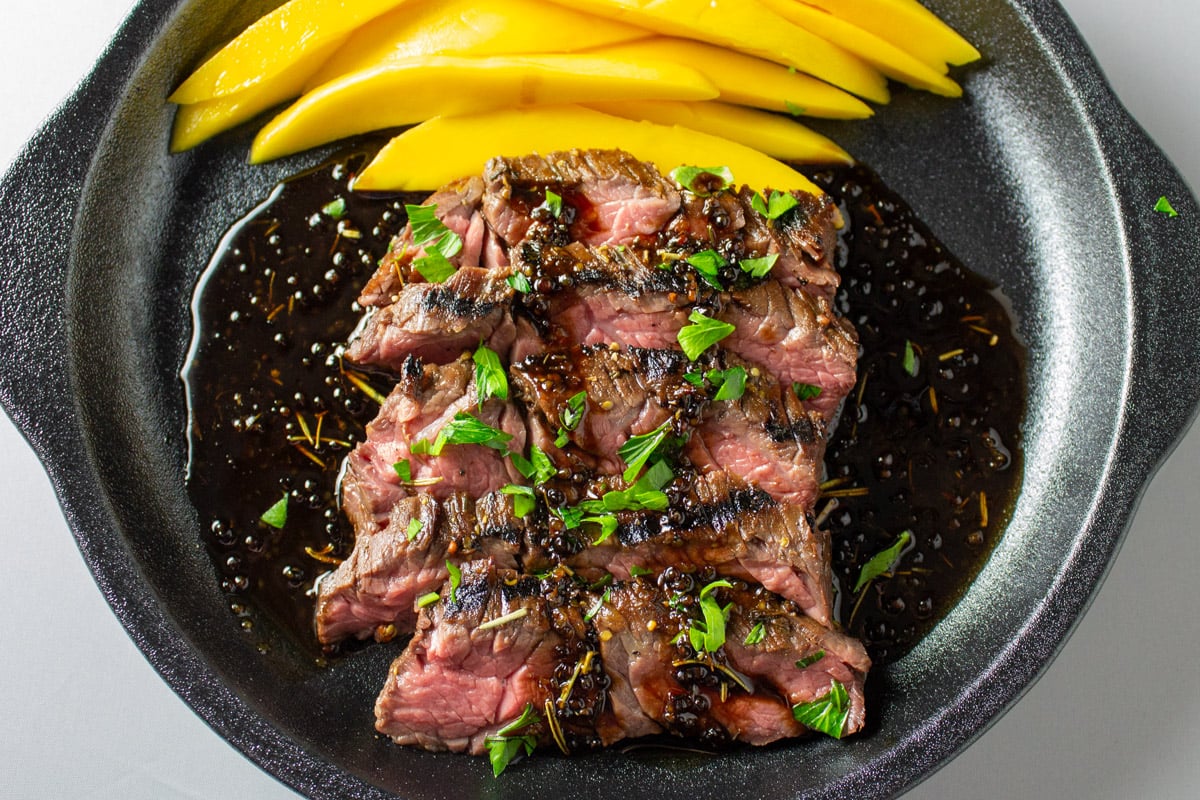
- SEAR AND SERVE: Remove steak from the bag and pat very dry with paper towels. Lightly oil and season again with salt and pepper. Grill over high heat or sear in a very hot skillet with a tsp oil for about 1 minute per side until browned. Slice thinly against the grain and drizzle with glaze before serving.
Recipe Notes
- Flank steak: Prime, Choice, AAA, or Angus cuts will be the most tender, but sous vide will make less expensive cuts tender with a little more cook time.
- Balsamic vinegar: This recipe is best with a high-quality balsamic. Lesser quality can be too acidic (you would need to add a touch of sugar and only marinate 6 hours or the meat can break down and get mushy. Then pat dry before sous vide cooking). Substitute with red wine vinegar and a bit of sugar or maple syrup.
- Time and Temperature options:
Cook for 2-4 hours depending on thickness and your preferred texture. I like 3 hours. For thinner flank steaks (about 1/2 inch/1.3 cm thick), reduce cook time to 1 1/2 to 2 hours.Desired Doneness Temperature Texture and Color Rare 125-129°F (52-54°C) Very soft texture with a red center Medium-rare (recommended) 130-135°F (54-57°C) Tender and juicy with a warm pink center Medium 136-140°F (58-60°C) Firmer texture with a pink center Medium-well 145-150°F (63-66°C) Mostly firm with just a hint of pink - Bag sealing options
- Vacuum seal: Fold over a flap on 1 (or 2) vacuum seal bags. Place flank steak (patted dry) into bag. Unfold flap and seal with vacuum sealer.
- Water displacement method: Place meat in a freezer-grade ziploc bag. Lower bag into waterbath, letting the water pressure push the air out of the bag. Seal the bag just above the water line before fully submerging it.
- Make-ahead: You can sous vide the flank steak and prepare the glaze up to a few days ahead. Chill the sealed bag in an ice bath for 20-30 minutes before refrigerating. When ready to serve, grill or sear the steak for 1-2 minutes per side and drizzle with the glaze.
- Freezing/reheating: After sous vide cooking, chill the sealed bag in an ice bath for 20-30 minutes, then freeze. Thaw overnight in the refrigerator if frozen. Reheat in a sous vide bath at the original cooking temperature for 30-45 minutes, then quickly sear or grill before serving.
Have made this several times and always delicious! Great for entertaining because it never fails. We have been cooking with sous vide 12-14 years❣️
Love hearing from a fellow sous vide enthusiast Diane — you’re clearly a pro now! It really is the perfect entertaining method – set it, forget it, and impress every time. Thanks so much for the kind words 🙂
Made this for the first time last night. Very good, I’ve never sous vide a steak before, but these instructions made it simple. I ‘rested’ the steak for a few minutes after the water bath to make sure that the temp wasn’t too high when I put it into the pan. The sauce was delicious. Highly recommended
So glad your first time experience was a good one Peter! Thank you for taking the time to leave a comment 🙂
I am making this recipe as I type. I am far from a Sous Vide expert but I usually do my flank steak up to even 24hrs but for no real reason. Do you have a reasoning behind how long you do your cook?
Thanks,
Dan
Hi Dan. Great question. If you research sous vide flank steak, you will see that there is a wide variation in timing. Ultimately, it’s best to do some experimenting. This recipe was one of my first sous vide recipes. I have since learned that the quality of the meat makes a difference. If you are using prime, choice, AAA, then 2-3 hours works really well for flank. For lower quality cuts, I would go a little longer e.g. 4-6. I personally don’t think you need 24 hours, but if that works for you, go for it. Hope that helps 🙂
Hi,
Love your recipes!
We have done Sous Vide for years but generally do not vacuum seal marinades. Usually the liquid is drawn up and out of the bag during vacuum sealing.
Do you have any tips/ tricks to prevent this?
Lastly, I was planning on searing it in my new carbon steel pan.
I’ve read not to use vinegar based sauces as it can alter the seasoning/ blackening of the pan. Would this be the case here?
Thank you very much!
So glad you’re enjoying our recipes! I’ve given up on vacuum sealing, particularly with marinades as, you’re right, they seep out when sealing. Only the fancier more expensive vacuum sealers work well with marinades I believe. I stick to ziplocks now.
As for the pan searing, you will be drying the meat well before searing with paper towels so I don’t think that should affect your pan. If you’re worried, though, can you use a different pan? Is hate to see it get ruined. I hope that helps.
I did not have a good experience with this recipe. I made the marinade as described. I marinated it for about 22 hours. I vacuum sealed it after that. I cooked it in the sous vide bath as specified. I seared it in a cast iron pan over high heat. I can only describe it as decently flavored but super mushy. Not tender, but mushy. The meat lost all texture. It seemed to be a good cut of meat prior to and was about two inches thick. So I don’t know if I overmarinated… if I water bathed it too long… I just don’t know. The glaze helped a little. But overall, I was disappointed. I gave it to my daughter in law to serve to my 14 month old grandson, because it was that soft. (He loved it.). Any tips? We do a lot of sous vide cooking and usually, our recipes are fantastic. So we aren’t novices. Where did we go wrong?
Hi Marilyn. I’m so sorry the recipe didn’t work for you. If you only cooked the meat sous vide for a few hours, I suspect the meat became mushy from the marinade. Lower quality (overly acidy) vinegar or too long a marinating time with an acidic component can do that. Do you think that could be it? I hope it works better next time if you try it again.
Thank you Cheryl. I think that’s what it was, actually, My balsamic vinegar may have been a little old… so therefore more acidic over time. Also, I thought that was a really long time to marinate it. Will try it again and thank you for getting back to me!
Hope it works better next time Marilyn. ?
Can you freeze glaze
You can, but may find the oil and vinegar separate which may not be that easy to blend again. A better alternative may be to store the glaze in the fridge in an airtight container or ziploc. It should last for a month or more. Hope that helps.
I have a small (1/2-3/4 lb) frozen, sealed flank steak. How long should I sous vide it?
Hi Karen, Since it’s small, usually an extra hour is needed for frozen meat. So a total of about 3 to 3 1/2 hours should be fine if it’s not too thick. Hope that helps.
The absolute BEST flank I’ve ever had. Cooked to perfection. Thank you!
Happy you enjoyed it! Thanks for taking the time to leave a comment ?
How does the reserved marinade make a glaze with so ,pouch olive oil..mine just separated
Sorry to hear you had trouble with the glaze. I haven’t had that problem before. You can try skimming off some of the oil before you boil it down. Or using a little less oil in the marinade. Another option is to stir in a cornstarch slurry once the glaze is boiling. That will thicken it and pull it together. A slurry of 1/2 tsp cornstarch mixed with a tbsp water should work.