
Orange Cake Recipe (Moist, Made With Whole Oranges)
“Everyone LOVED this cake! One person called it divine, another…went on and on about it!… It is very moist and strong orange flavor…” Lynn
This super moist orange cake recipes is soft, moist, and packed with bold citrus flavor – made with whole oranges for intense fresh orange flavor.
It’s simple to make using a blender or food processor, and delivers that “wow” factor whether you serve it plain, dusted with powdered sugar, or topped with orange buttercream.
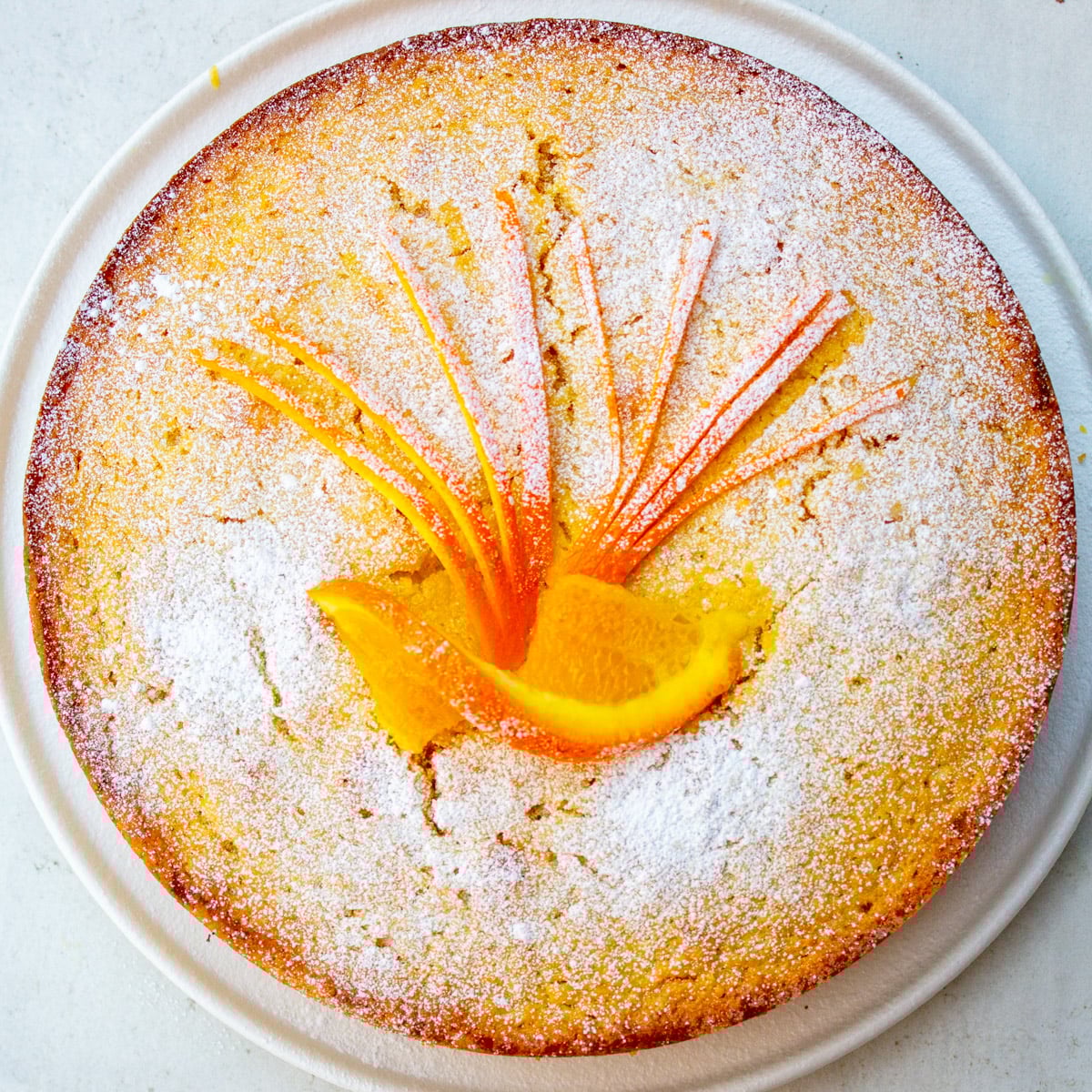
I’ve been making a version of this recipe, originally from Noreen Gilletz, for over 30 years. If you love orange desserts with bold (not subtle) orange flavor, this one’s a keeper.
What to expect
Taste & texture
- Soft, tender cake that’s exceptionally moist
- Bold orange flavor throughout – not just a hint
- Any bitterness from the orange peel is reduced with a simple trick
Process & ease
- Made with whole oranges for maximum flavor – blended for a smooth batter.
- No juicing or zesting – just blend and go
- Simple prep with minimal ingredients
Using whole oranges gives the cake its signature fresh, intense citrus flavor. If your oranges have a thick white pith, trimming some of it before blending helps keep the flavor bright and balanced without bitterness.
Easy enough for everyday, but special enough to serve at a shower, tea, or dinner party.
Ingredients – tailored to your taste
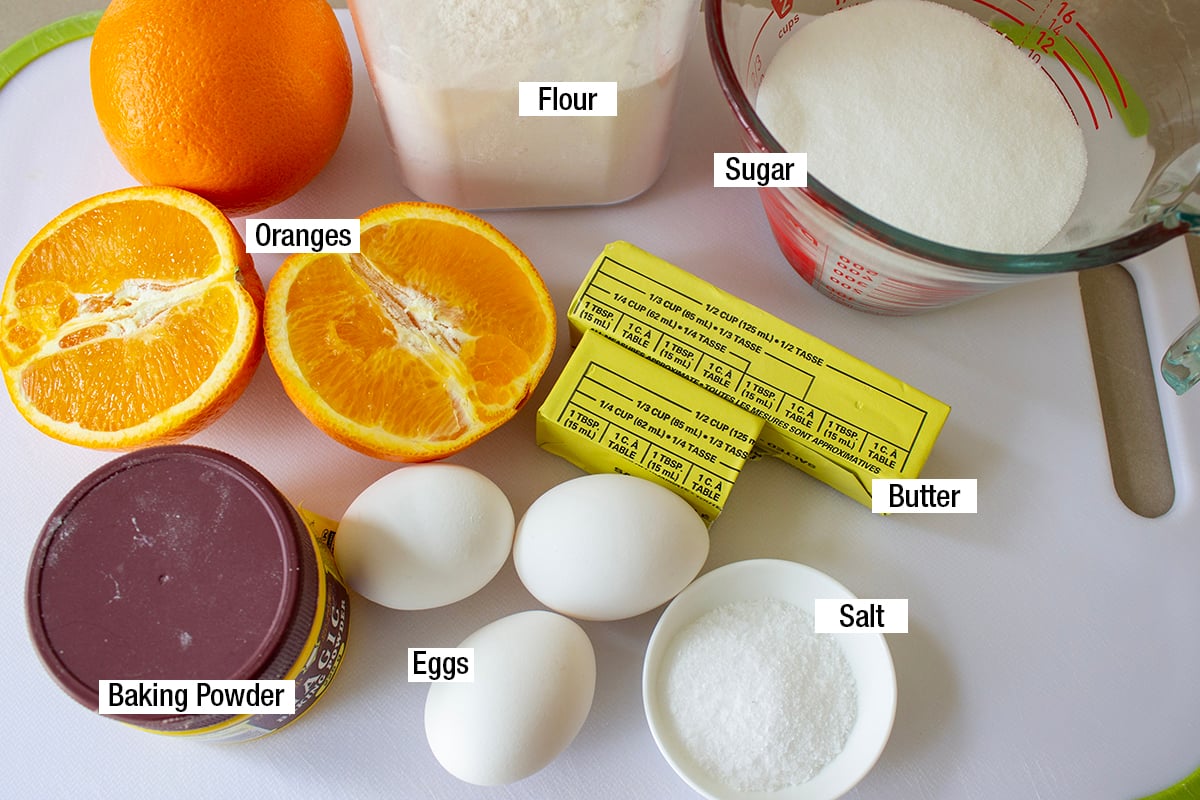
- Oranges: Use 2 sweet, seedless oranges (navel, Cara Cara, or Valencia all work well). If the oranges have very little white pith under the rind, you can skip removing it. Thicker pith should be trimmed to avoid bitterness
- Remaining cake ingredients: eggs, flour, sugar, baking powder, butter, salt.
- Glaze or frosting (optional): butter, icing sugar, orange juice, and orange zest
Substitutions
- Flour – you can substitute 1/4 of the all-purpose flour with almond flour or whole wheat flour. Replacing more than that will change the texture of the cake and make it denser.
Variations
- Glaze/frosting (optional)
- I use a thin orange buttercream glaze, but you can easily adjust it. For a thicker frosting, use more butter and icing (confectioner’s) sugar or less orange juice.
- A 3-minute chocolate buttercream icing (like we use on our best banana cake) is excellent here because chocolate and orange are a perfect pairing.
- Or try this cream cheese frosting from our blueberry cake recipe. Add orange zest to make it an orange cream cheese frosting.
- Decoration – For a simple finish, try orange peel, thinly sliced orange slices, a dusting of confectioner sugar, chocolate shavings, or crushed toasted nuts.
Step-by-step instructions
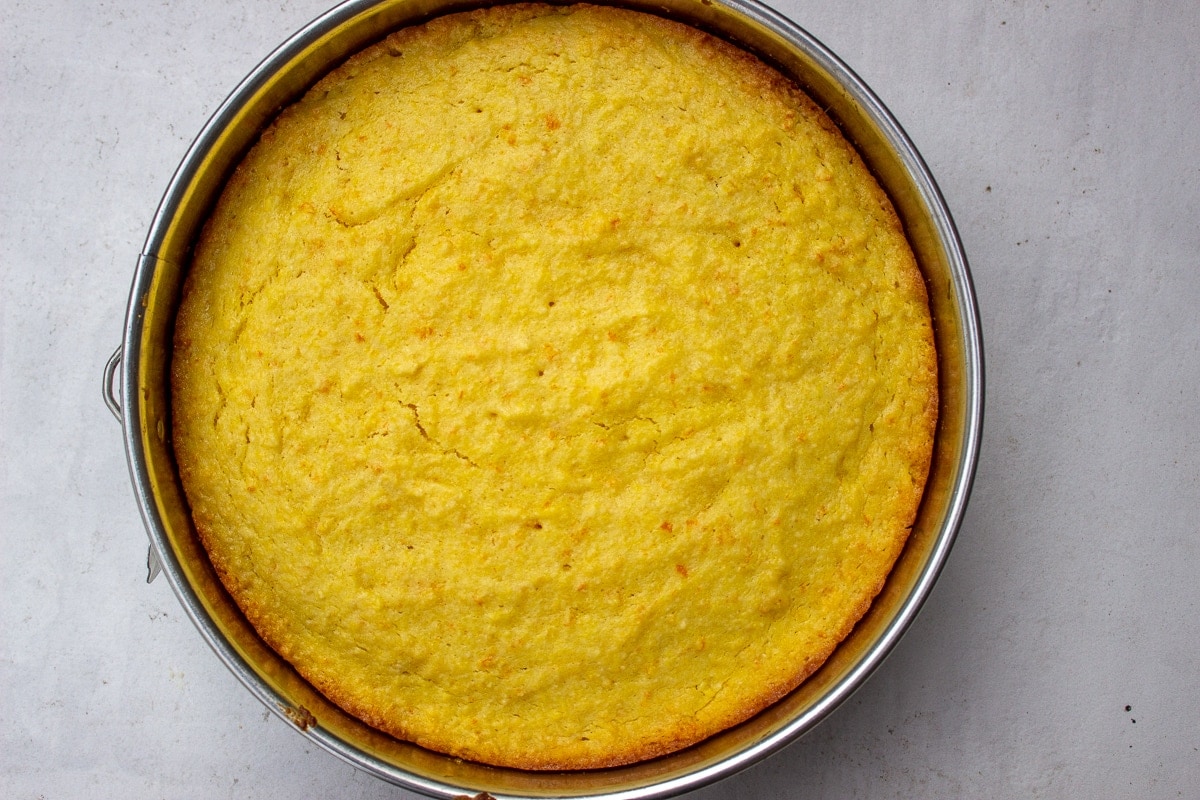
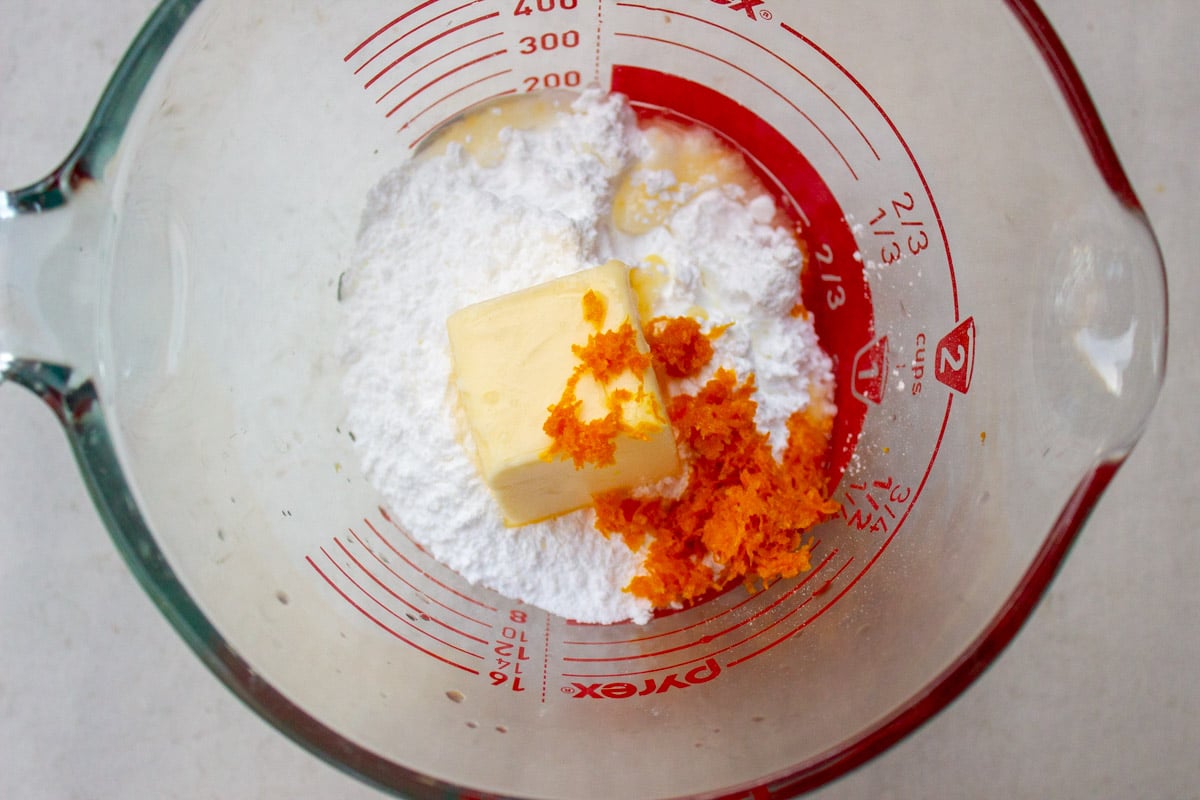
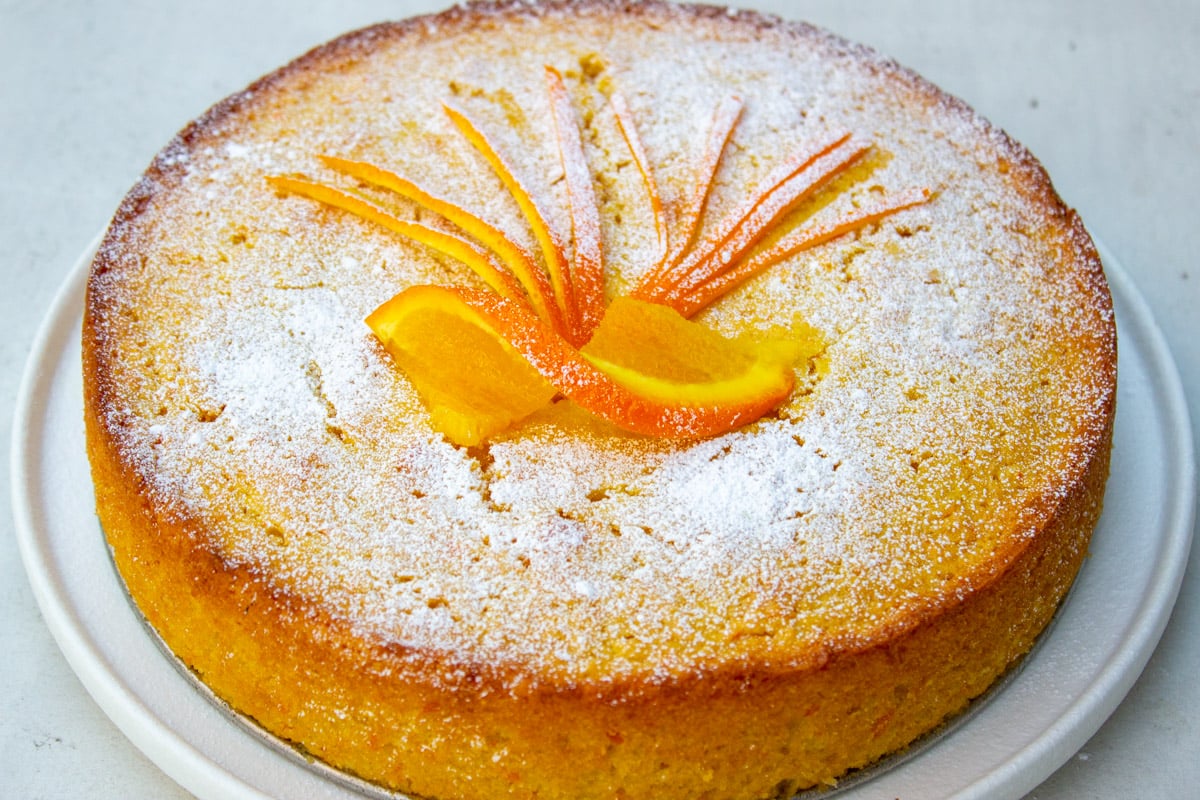
Tips
- Reduce bitterness: Trim most of the white pith under the orange peel before processing the oranges. This keeps the taste bright and prevents bitterness.
- Use room-temperature ingredients: Butter and eggs blend more smoothly (without curdling), helping create a lighter, more even texture.
- Don’t overmix: Once the flour is added, mix just until combined to keep the cake tender.
Shortcuts
- Use thin-skinned oranges: If your oranges have very little white pith, you can use them whole without trimming.
- Keep the finish simple: Skip the glaze or frosting and dust the cooled cake with icing (confectioners’) sugar instead.
What to serve with orange cake
This cake is flavorful enough to stand on its own, but a few simple additions can round it out for dessert or entertaining.
For a simple finish: Whipped cream or a spoonful of lightly sweetened yogurt. Or a side of fresh berries.
For a more dessert-style plate: A scoop of vanilla ice cream and/or a drizzle of chocolate or caramel sauce.
For brunch or afternoon tea: Coffee, espresso, or tea. And fresh fruit or a light fruit salad.
Orange cake tips & FAQs
Most of the bitterness comes from the white pith, not the peel itself. To keep the flavor bright without bitterness, trim away most of the pith before blending the oranges.
If your oranges are very thick-skinned, you can also boil the peel to mellow any bitterness.
Yes. Using whole oranges (including the peel) gives the cake a deeper citrus flavor and extra moisture. Just remove any seeds and trim excess pith if it’s thick.
You’ll need a food processor or blender to break down the oranges and create a smooth batter.
You can also use it to cream the butter, sugar, and eggs, then blend in the oranges – no need to wash it in between.
You can use a 9″ (23cm) springform pan, two 8″ (20cm) round pans (for two layers), an 8″ (20cm) square pan, a 9″ round pan, or a 9×5″ (23×12.7″) inch loaf pan.
Baking time will vary, so start checking for doneness during the last 10 minutes.
Yes. The cake keeps well at room temperature for a day and actually improves in flavor after a few hours. For longer storage, let it cool completely, wrap well, and freeze for up to 3 months.
Dense texture is usually caused by overmixing, too much liquid, or inaccurate flour measurement. Use room-temperature ingredients, measure flour carefully, and avoid adding extra orange, which can make the center heavy or sink.
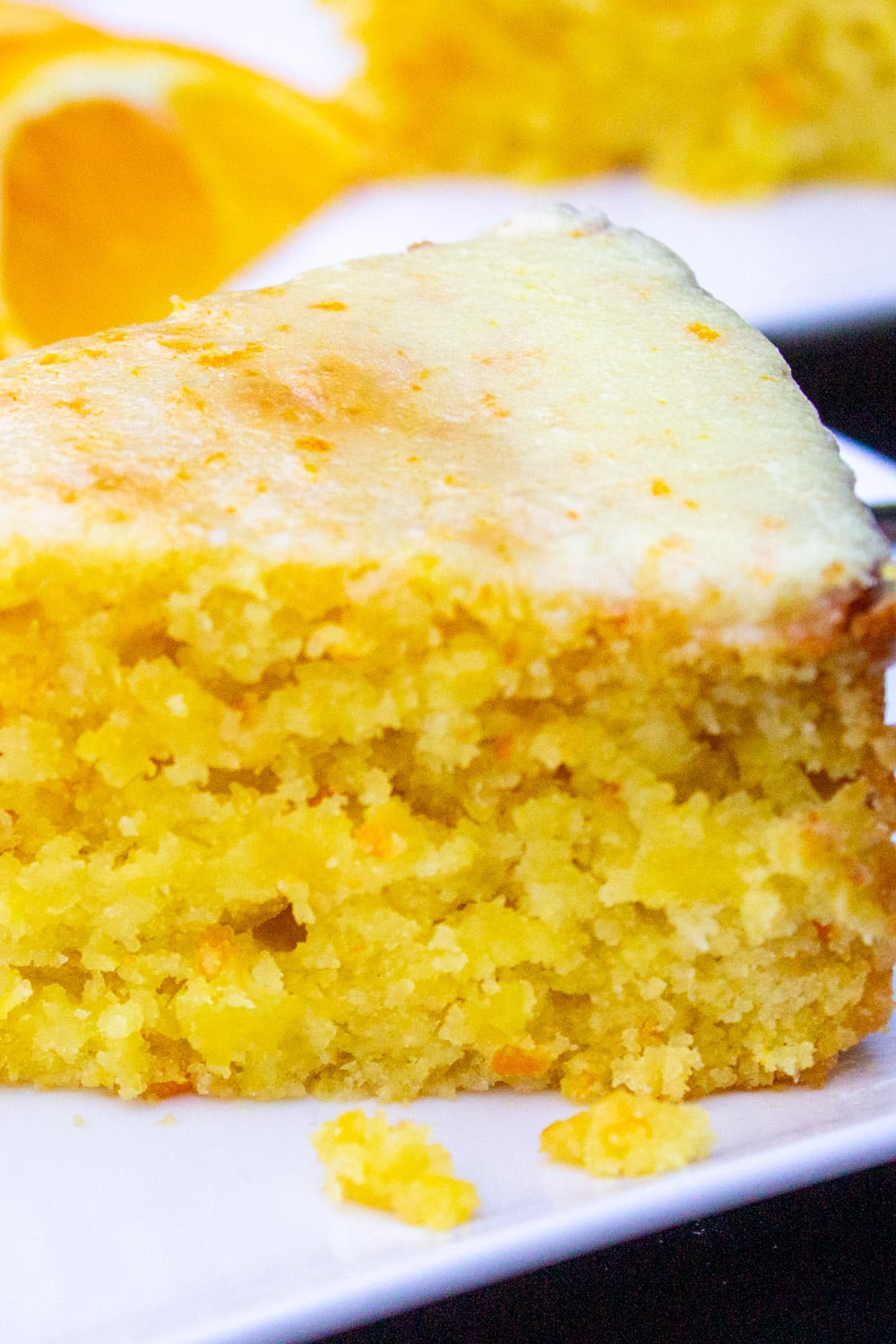
More cake recipes to try:
If you enjoyed this moist orange cake, here are a few more easy, popular options to try:
- Best banana cake with chocolate icing – super moist and very popular
- Moist apple cake recipe with bourbon caramel sauce – warm spices, decadent sauce!
- Simplified blueberry cake with cream cheese frosting – a simple version that is still special
- Easy berry cake – with fresh or frozen mixed berries.
Need a gluten-free option? Try our orange polenta cake – citrusy, moist, and naturally gluten-free.
If you make this recipe, let us know how it went! A rating & comment below mean a lot to us.
Moist Orange Cake Recipe
Equipment
- food processor (or blender), medium-large mixing bowl, 9" (23cm) springform pan, Note 1 for other pan options.
Video
Ingredients
whole orange cake
- 2 large seedless oranges about 184g each
- ¾ cups butter, cut in chunks 1½ sticks
- 1 ¼ cups granulated sugar (use an extra ¼ cup/50g if oranges aren't too sweet)
- 3 large eggs
- 2 cups all purpose flour Note 2
- 2 teaspoon baking powder
- ¼ teaspoon salt skip if using salted butter
orange glaze or buttercream frosting (optional) Note 3
- 1 cup icing sugar also called confectioners or powdered sugar
- 2 tablespoon butter, softened
- 1 orange (use half an orange for fresh orange juice and zest) other half for decoration
- ¼ teaspoon vanilla extract
Instructions
- HEAT OVEN TO 350F/177C. Spray 9 inch (23cm) springform pan with oil. Note 1 for other pan options.
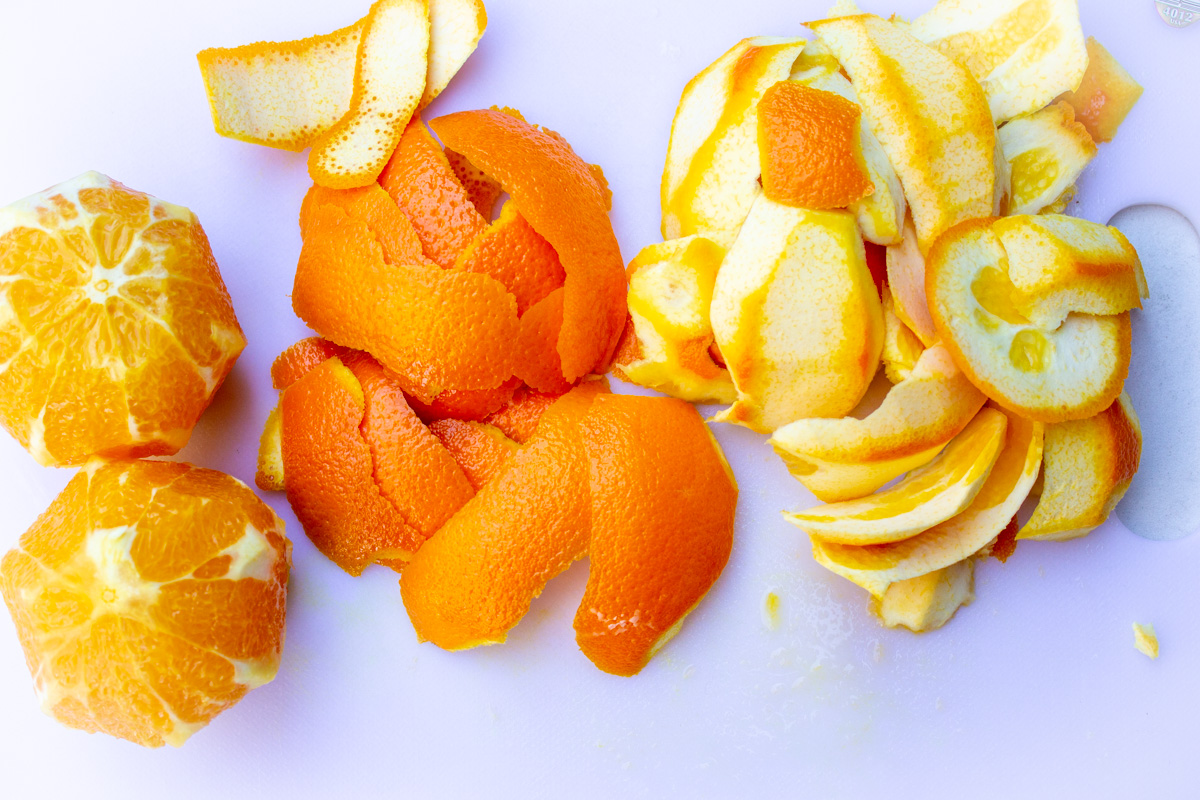
- PREPARE ORANGES: Using a sharp knife, place orange on cutting board and slice off the thin top orange layer all around the orange. Try to get as little of the white pith layer as possible (leaving on some is fine – no need to obsess!). Then slice off the white pith layer and discard. Repeat with second orange. Cut oranges into quarters. Shortcut: If your oranges only have a very thin layer of pith, you can use the whole orange.
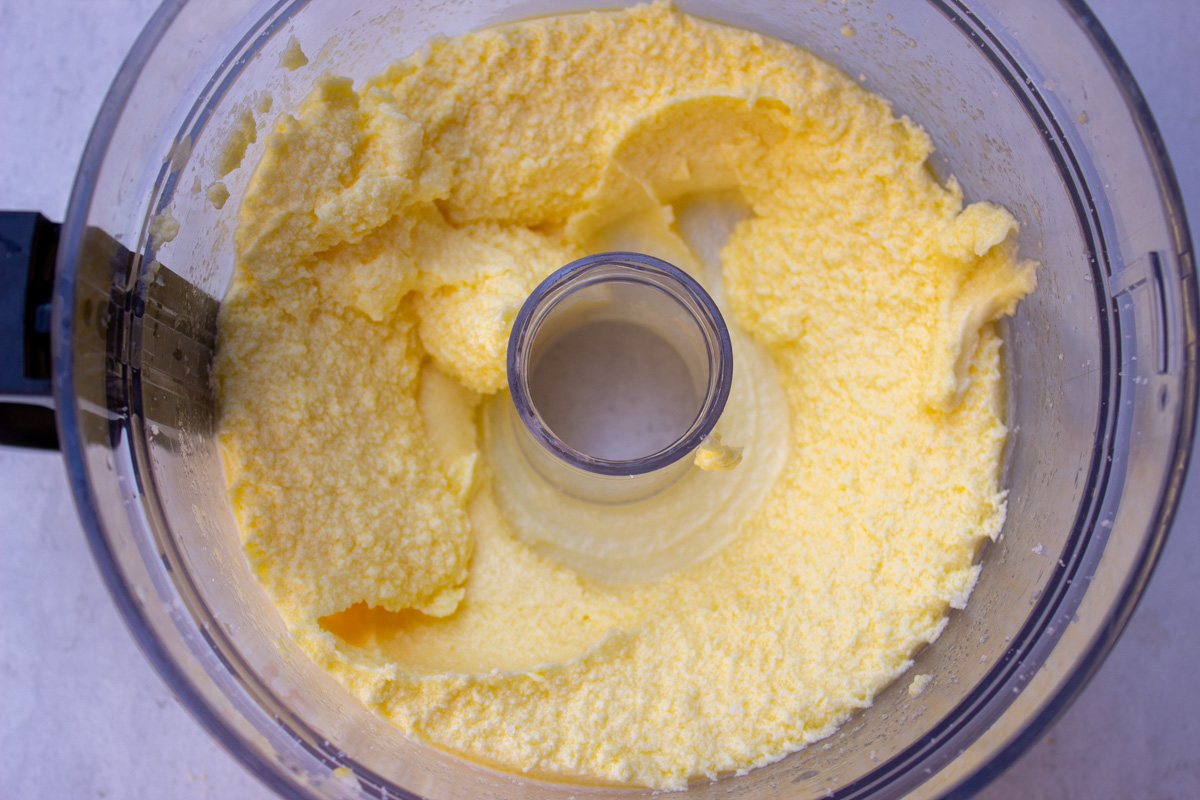
- CREAM BUTTER, SUGAR, EGGS: Place butter, sugar and eggs in food processor bowl. Process for 2 minutes at high speed until fluffy and creamy. Scrape down sides of bowl once or twice. Scoop mixture into medium-large bowl.
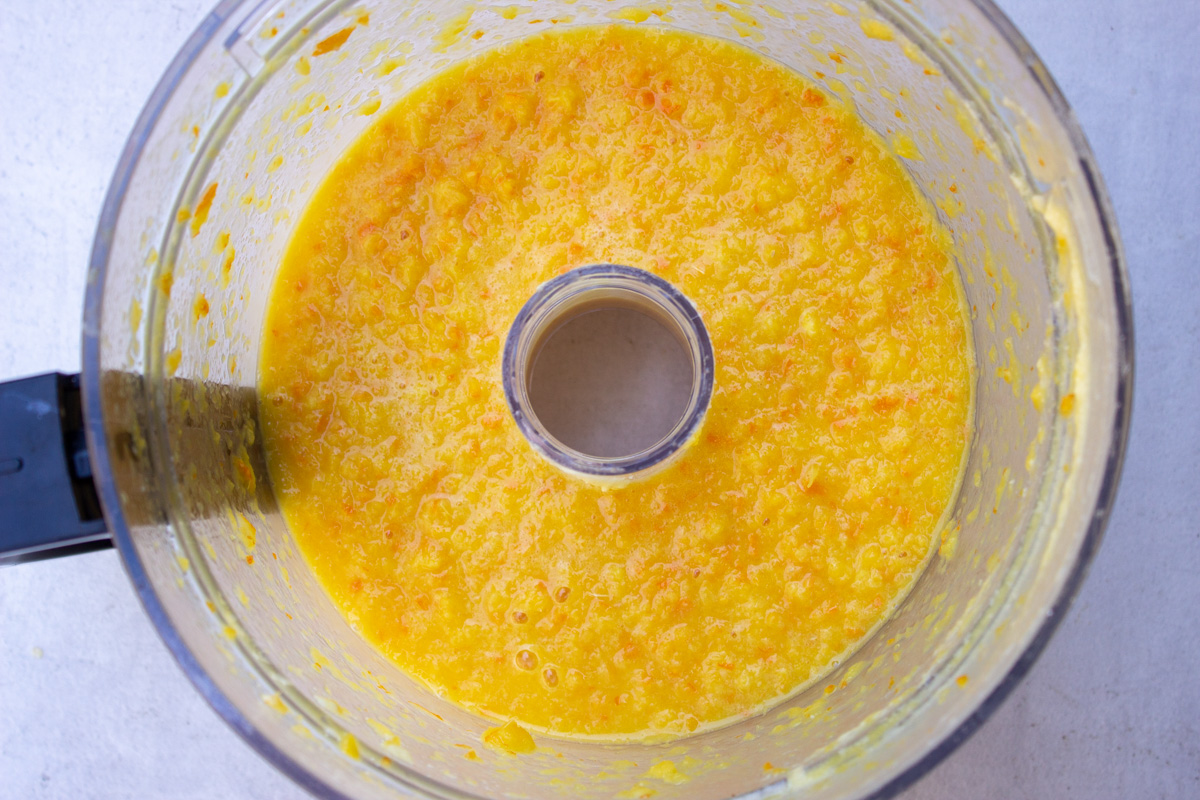
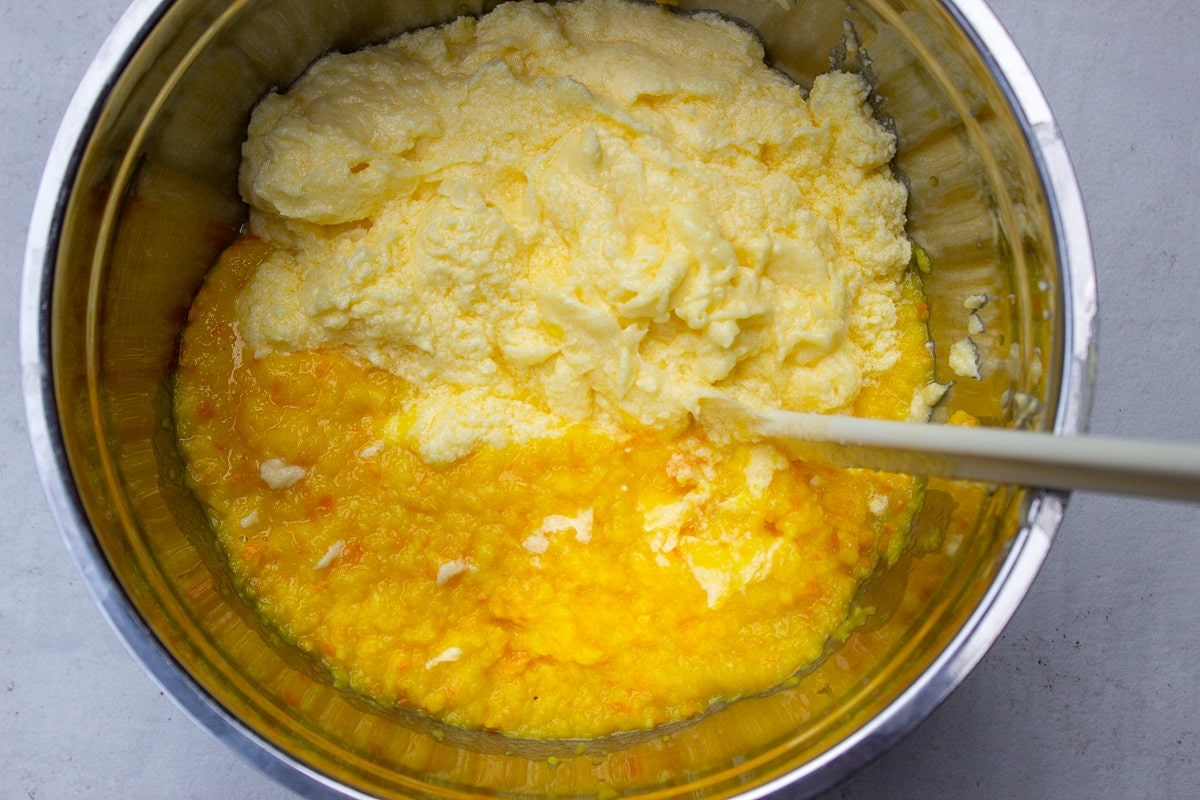
- GRIND ORANGES: Place oranges and orange peels in food processor. No need to clean out processor first. Process until finely blended, about 1 minute. Scrape orange mixture into bowl with butter mixture.
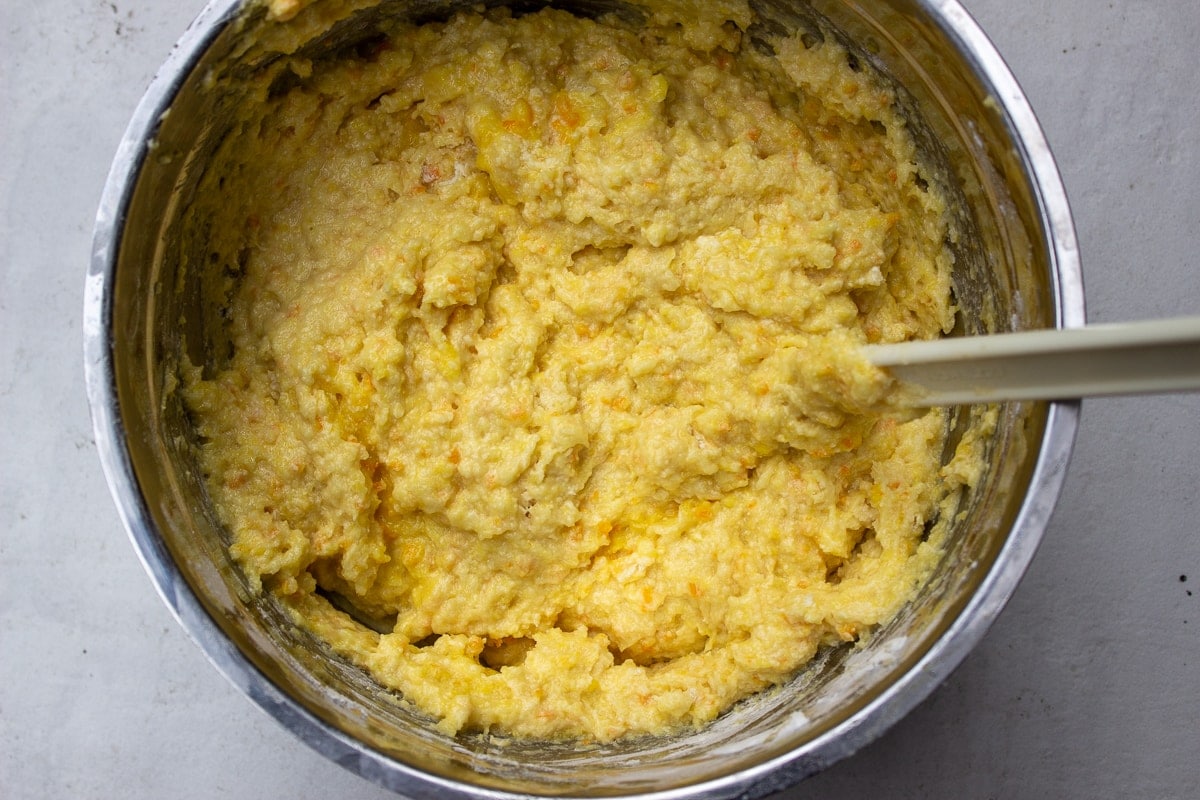
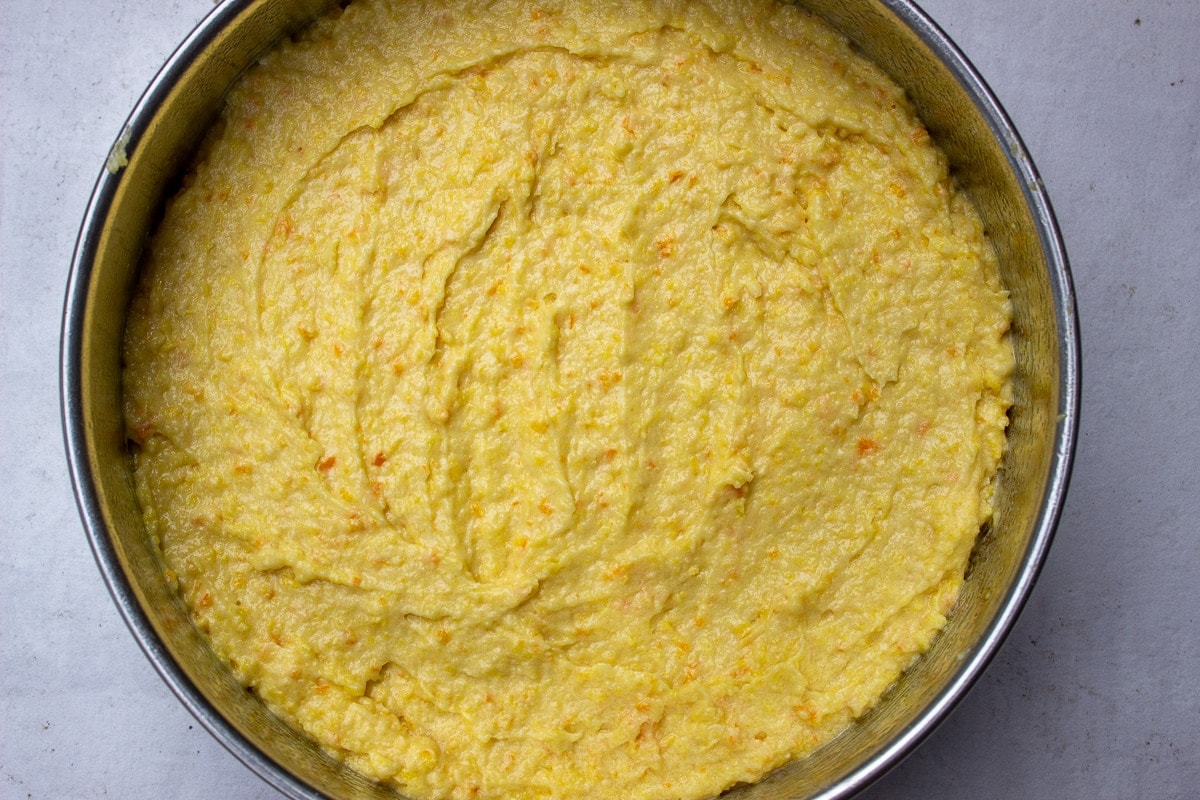
- FINISH BATTER: Add flour mixture of flour and baking powder. Gently fold into wet mixture just until incorporated. Do NOT over mix or the cake will be dense. Pour batter into prepared pan. Tap pan on counter to level the batter evenly.
- BAKE: for 45-50 minutes or until cake no longer jiggles when shaken and when cake tester or toothpick is inserted in center and comes out clean. Two 8" round pans will take less time, about 25-35 minutes. Timing depends on size of oranges (amount of liquid in cake) and your oven (all ovens are different and not perfectly accurate on temperatures). Remove from oven and let cool for 10 minutes before removing on pan. Cool completely on cooling rack before frosting.
- MAKE FROSTING/GLAZE (OPTIONAL): While cake is baking, whisk icing/confectioner sugar, 1/2 of orange juice and orange zest with a fork in a small bowl. Add more orange juice until you get the consistency you like. Note 3 for traditional orange buttercream frosting.
- DECORATE: Sprinkle orange cake with powdered icing sugar (through a sieve) if not using frosting. If using frosting/glaze, spread it on top of cake letting it slip down the sides if desired. Decorate cake with orange zest strips, orange slices, drained mandarin oranges, a little bit of zest or crushed nuts if you like.
Recipe Notes
- Pan options: Different pan sizes will affect baking time, so start checking for doneness during the last 10 minutes. You can use:
- 9-inch (23 cm) springform pan (what I use)
- Two 8-inch (20 cm) round pans (for a layer cake)
- 8-inch (20 cm) square pan
- 9-inch round pan
- 9×5-inch (23×12.7 cm) loaf pan
- Flour options: You can substitute up to 1/4 of the flour (in this recipe, 1/2 cup/68g) with almond flour or whole wheat flour. More than that will make the cake dense.
- Orange frosting/glaze: The recipe makes enough thinner frosting/glaze to cover the top of the cake. If you want a thicker, more traditional buttercream frosting (easier with a food processor or electric mixer, use:
- 1 1/2 cups (180g) icing sugar,
- 1/4 cup butter ((4 tbsp/1/2 stick/57g) and
- 2-3 tbsp orange juice.
- Other frosting options:
- A chocolate buttercream frosting like we use on our best banana cake is a fantastic option because chocolate and orange are a perfect match.
- Or try this cream cheese frosting from our blueberry cake recipe. Add orange zest to it if you like.
- Lower calorie, lower fat version: Substitute half the butter with unsweetened applesauce using 6 tbsp butter and 6 tbsp applesauce. And skip the frosting (just dust with icing sugar).
- Make Ahead:
- The whole orange cake can be stored at room temperature for 3-4 days in an airtight container to keep it fresh and moist.
- The cake can also be frozen for 2-3 months.


Made this for my wife using local oranges (in Spain). I used your tip of boiling the oranges instead of cutting out the pith. Excellent recipe. Thank you.
Glad to hear the cake worked out well with your local oranges. Thanks for taking the time to comment Tim 🙂
can i replace butter with oil? thank you
Yes, for this recipe, you can replace the butter with oil. Replace the ¾ cup butter with ½ cup + 1 tablespoon of a neutral oil like vegetable or canola. Skip the creaming step — just whisk the oil, eggs, and sugar together before adding the orange mixture and folding in the dry ingredients.
The cake will be very moist and stay tender longer, though slightly less rich in flavor. Since oil has no water content, it may bake a few minutes faster — start checking at the 40-minute mark. Let us know how it turns out!
Making this for my daughter! Just today, she was looking at some orange cakes at a bakery and saying, “Mom, I am craving orange cake! ”
Have you tried to make this as cupcakes? If so, did you change anything?
Hi Yvette, good question. I haven’t tested this as cupcakes, but it should work well. Fill standard cupcake liners about two-thirds full – you’ll likely get around 16–18 cupcakes. Bake at the same temperature and check for doneness when a tester comes out clean, usually around 18-22 minutes. I’d start checking at about 17 minutes since ovens can vary. Let me know how they turn out!
Hello, I was wondering if this recipe could be made with satsumas rather than oranges?
Great question. I haven’t tried it, but I think satsumas (or other mandarins) would work well as their skin in thinner with less pith – and less bitter. Make sure you remove any seeds – otherwise you can use the whole mandarin. You will likely need 4 satsumas to replace the two large oranges needed in the recipe. Let us know how it turns out if you try it.
This was an easy delicious cake, Shortcut route, so easy. Well received just a bit of powdered sugar on top
I find the shortcut route with just a dusting of powdered sugar works well too. Glad you enjoyed it. Thanks for the feedback!
Perfect recipe.
I must admit that I reduced the sugar to about 190 grams and – because I’m too lazy to make a topping – just threw some dark chocolate chunks on top before throwing everything in the oven (2 8-inch springform pans). Or, rather, the Ninja Combi. I used your temperature setting and halved the time since the steam phase makes up for the rest and the result was absolutely delicious. My first cake in about 10 years, and my very first in the Combi. Will try the regular baking option later.
Thanks for this wonderful recipe and the great tips and suggestions!
Clever idea throwing on dark chocolate before baking. Great combination. Thanks for sharing your first success after 10 years – cheers to many more!
I used a spring form pan. Baked for 43 minutes. Turned out moist and perfect!! I used a cream cheese frosting with extra orange zest. So many compliments on this cake!!
Making it again this weekend for my granddaughter’s Birthday party 🥳🎉
I’m thrilled to hear it worked so well and got so many compliments. Hope your granddaughter loves it too!
I’m thinking of making this recipe. Do you think it would work if I did a lemon glaze on top so it becomes a more mixed citrus flavour?
Yes, I think a lemon glaze would work nicely – the cake will be a citrus blend.
This was really good! It over filled up an 8 inch pan and I transferred a little to a round 6 inch baking pan. My friends loved it!
Good solution. Glad everyone enjoyed it!
Simple and tasty. I baked around 40 mins in a round pan with diameter of 28cm, so it become little more dry out, bit still rich taste inside.