
Cheesy Scalloped Potatoes (Simplified, 1 Hour)
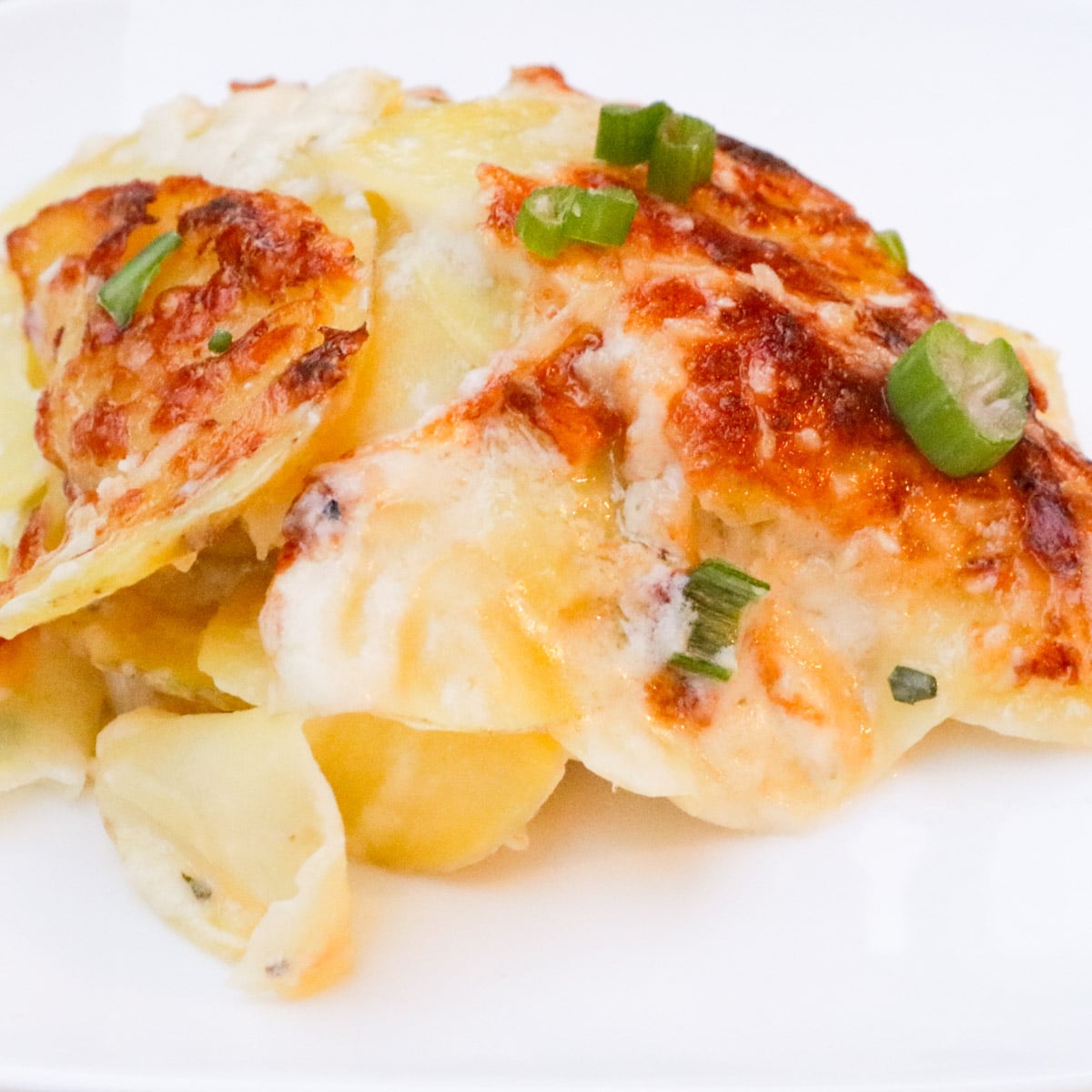
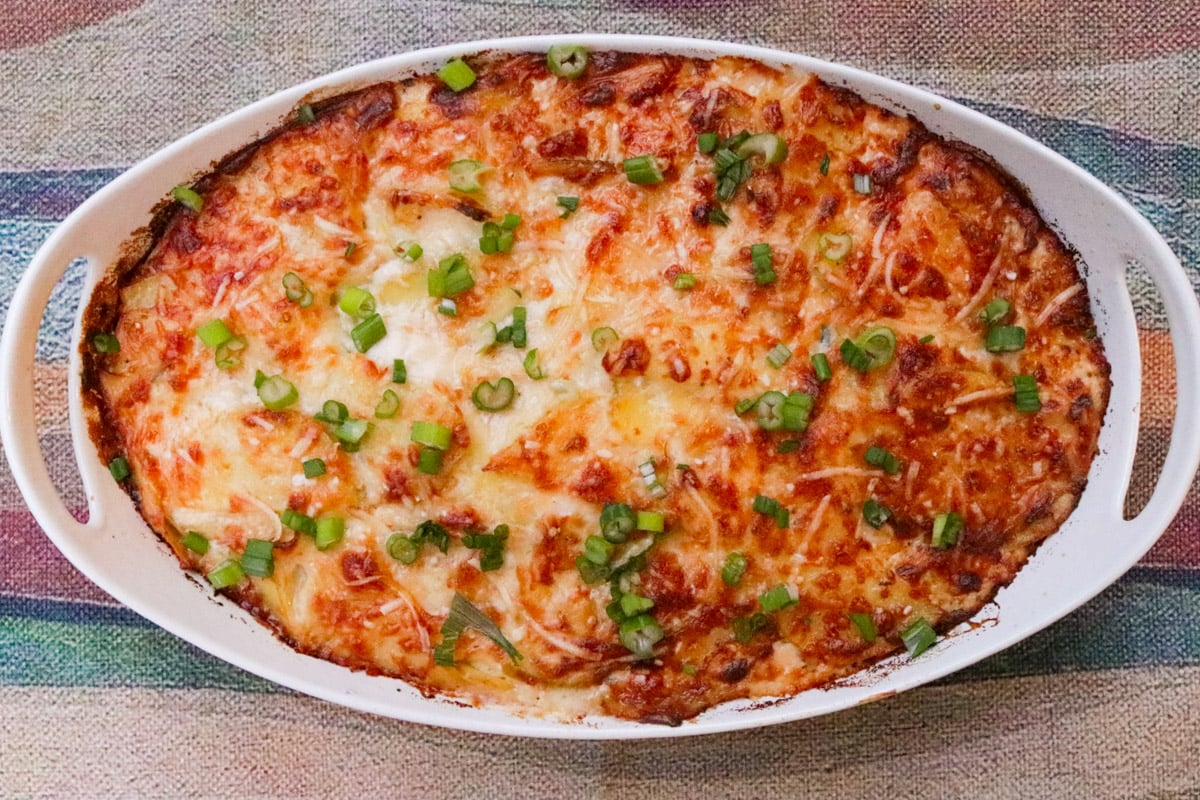
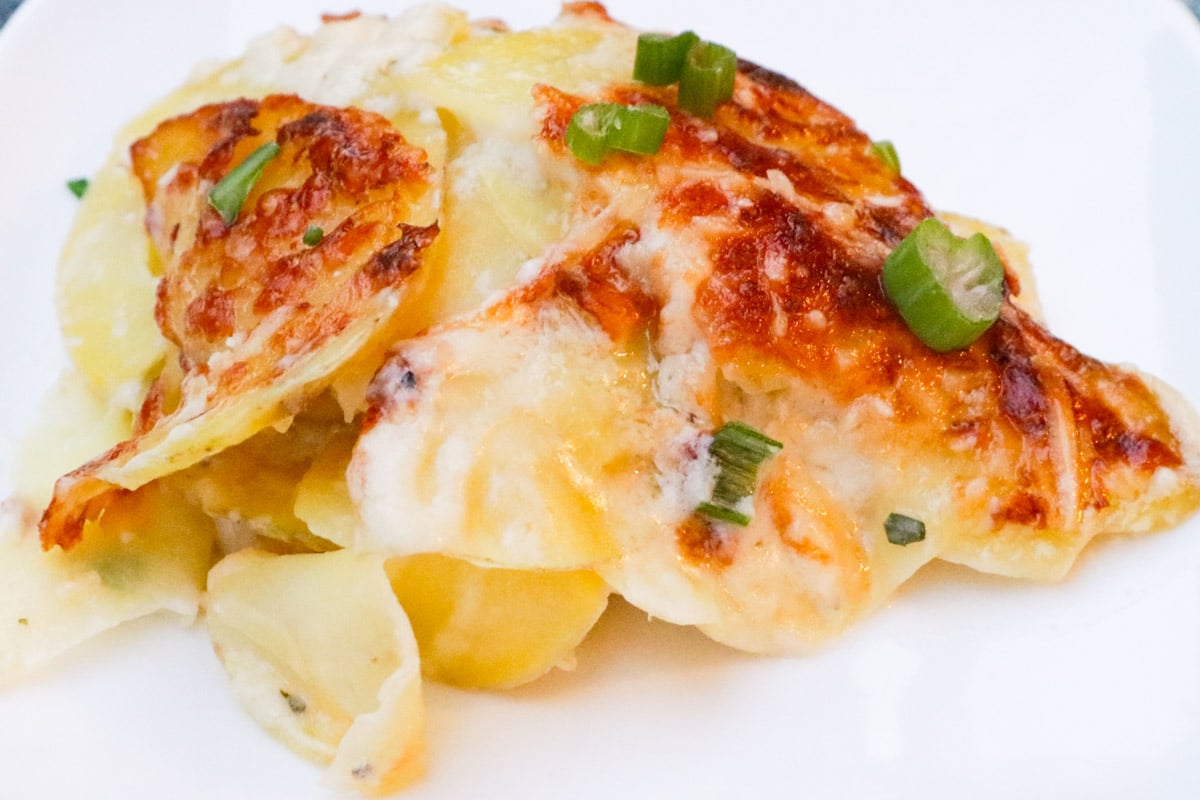
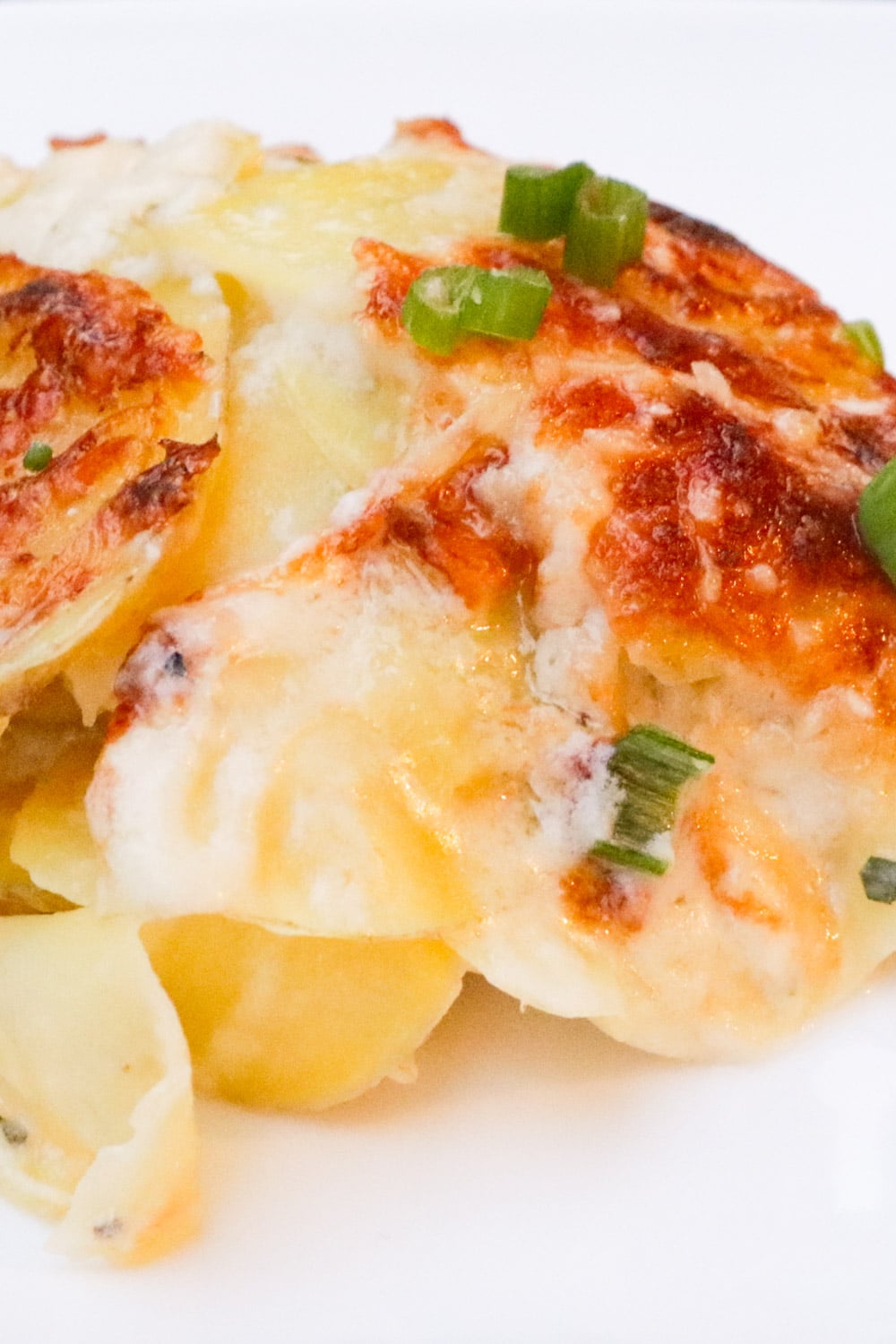
These cheesy scalloped potatoes are a modern variation of the classic – thin potato slices baked in a creamy white sauce, made richer with cheese. This version keeps all the comfort but simplifies the method and cuts the time nearly in half. Creamy, tender, and flavorful with a beautifully browned top.
It bakes in about an hour instead of the usual 1½ to 2 hours, and there’s no layering required. Make it as rich or as light as you want.
What to expect
- Taste and texture: Soft, creamy, tender potatoes with the classic scalloped feel – with added cheese for a touch more richness. Comforting and familiar.
- Simplified method: Like many modern recipes, we use a mandolin or food processor for thin slices, but skip both peeling (if using Yukon Golds) and the fussy layering. The potatoes are simply tossed with the cheese sauce and baked. It’s easier, and the taste and texture stay exactly the same.
- Quicker recipe – the trick: Very thin potato slices cut the baking time dramatically. Skipping the layering step saves even more time. Our version is ready in about an hour instead of the usual 1½–2 hours.
- You have choices for richer or lighter ingredients, adding herbs, and the hallmark bubbly top.
Ingredients – tailored to your taste
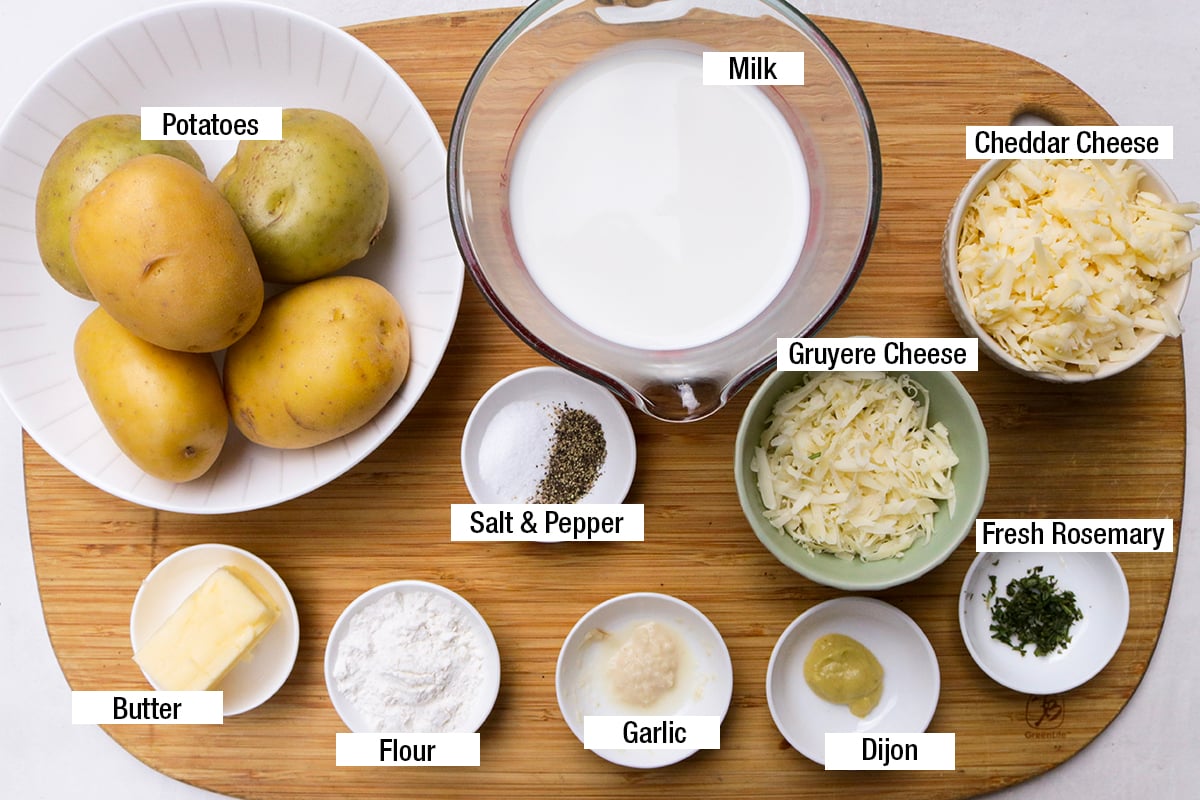
- Potatoes: Yukon or russet both work. I prefer Yukon Golds – they are naturally creamy, and no peeling is needed (the skins are very thin). Russets have more starch and thicker skins which most people prefer to peel.
- Cheese: For the best balance of flavor and meltiness, I use a combination of freshly grated sharp cheddar and Gruyère.
- Milk/cream: Any milk or cream works. I use mostly 2% with a bit of half-and-half cream for a creamy sauce that’s not too heavy. Whole milk works well, too.
- Added flavors: A little garlic, fresh rosemary (optional), Dijon mustard, and a pinch of pepper give the cheese sauce more depth.
Substitutions
- Cheese:
- Swap Gruyère for Swiss, Fontina, or Monterey Jack (milder).
- Use all sharp cheddar if you prefer – more classic.
- Replace part of the cheese with Parmesan for a saltier, sharper taste
- Flavors:
- Swap the rosemary with thyme or chives.
- Use garlic powder instead of fresh garlic.
Variations
- Lighter (lower calorie) options:
- Use part broth and part milk for the sauce.
- Reduce the cheese slightly.
- Swap some of the cheese for a lower-calorie option like part-skim mozzarella or reduced-fat cheddar. Reduced-fat cheeses tend to melt less smoothly, so it’s best to blend them with some regular cheese.
- Topping options:
- Leave the top cheese-free (it will still brown, but not as much).
- Sprinkle on Parmesan for extra browning and a deeper flavor.
- Add more cheddar or gruyère on top for an oozy cheesy layer.
- Gluten-free version: Swap the flour for a 1:1 gluten-free blend, or thicken the sauce with a cornstarch slurry added at the end.
- Flavor variations: Add a pinch of smoked paprika to the sauce. Or a pinch of nutmeg, which is traditional in many scalloped potato recipes.
Step-by-step instructions
Tip
To cook the scalloped potatoes more quickly and evenly:
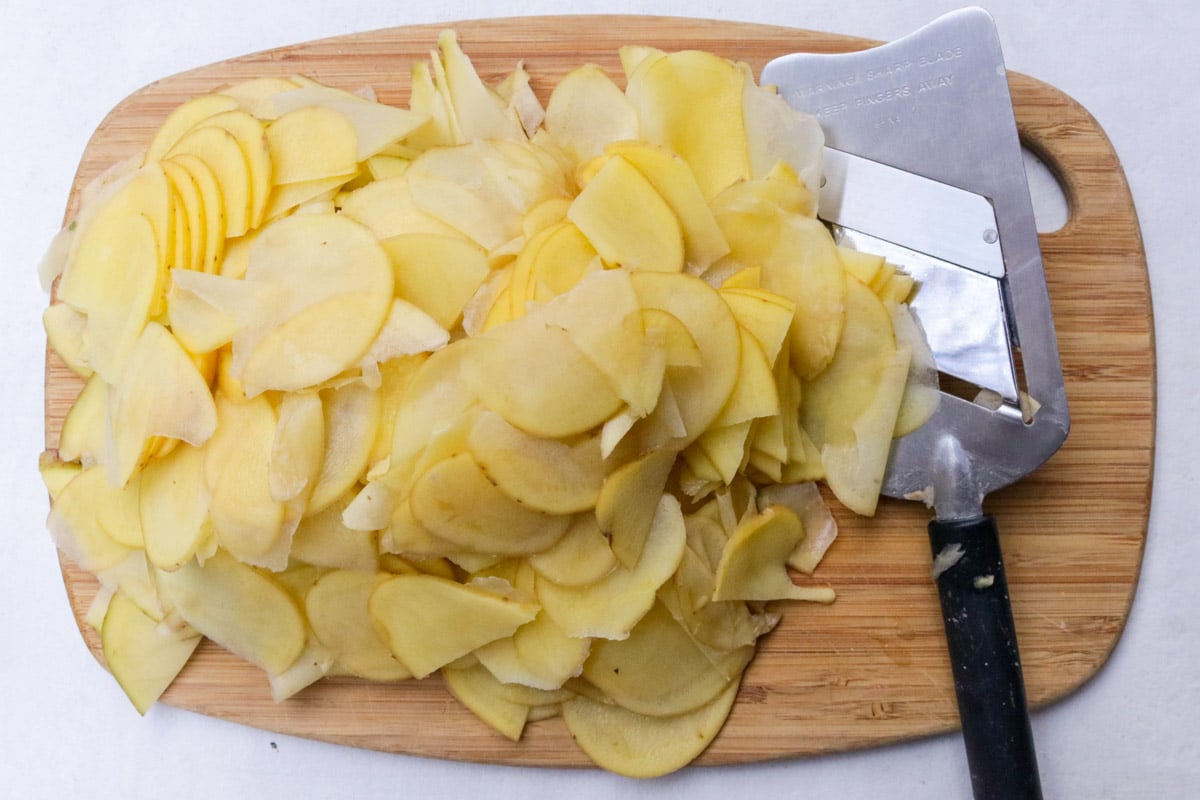
- Slice the potatoes very thinly (~2 mm).
- If sliced potatoes are very wet, remove excess moisture with a paper towel. This will improve consistency, help the sauce cling and prevent a watery sauce.
- Use a shallow baking dish. A wider, shallower dish also gives you a larger golden brown bubbly surface area.
Shortcuts
There are a couple of big time-savers built into the recipe:
- Use a mandolin or food processor for fast, thin, even slicing (and quicker baking time).
- Use Yukon potatoes, which don’t need to be peeled.
- Skip the layering of potatoes and sauce. Just toss everything together and bake.
Another shortcut: pre-shredded cheese. Choose a single-cheese bag (sharp cheddar, Swiss, Gruyère-style) and avoid multi-cheese blends with lots of anti-caking agents that can cause graininess.
What to serve with scalloped potatoes
Scalloped potatoes are a classic side dish for a holiday dinner or special occasions. Here are a few perfect main dish pairings to choose from:
- Prime rib (reverse sear)
- Leg of lamb (sous vide) or roasted leg of lamb.
- Rack of pork
- Teriyaki glazed chicken
- Sous vide brisket with maple soy apricot sauce
Serve them with lighter sides to balance the richness.
- Microwave green beans with almonds
- Citrus salad or Festive winter salad
- Healthy creamed spinach (no cheese, 15 minutes)
FAQs: Troubleshooting and Make-Ahead
A grainy or separated sauce usually means the cheese didn’t melt smoothly. This can happen with pre-shredded cheese that has too many anti-caking agents (starches) or heating cheese over high heat.
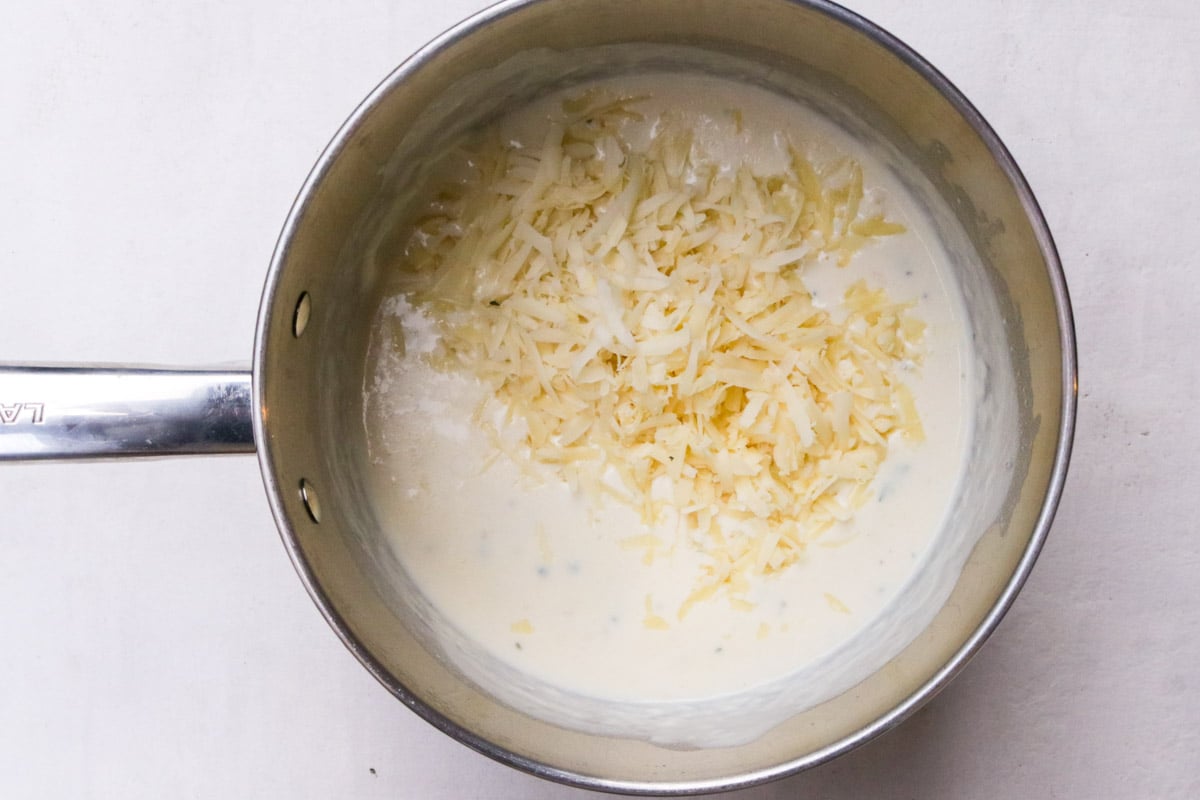
For a smooth sauce, use a good-quality cheese (fresh or pre-shredded), avoid pre-shredded multi-cheese blends, and whisk the cheese into the sauce off the heat so it melts gently.
The most common reasons are thick slices, not enough sauce, or just not baking them long enough. Make sure the potatoes are very thin (about 2 mm), fully coated in the sauce, and baked until a knife slides in easily with almost no resistance. If the top is browned but the potatoes are still firm, cover the dish and bake a little longer.
Yes. Bake the potatoes until they’re just tender, then let the dish cool, cover, and refrigerate for up to 2 days. To reheat, bring the dish to room temperature for ~30 minutes, cover with aluminum foil, and bake at 350°F/180°C until hot and bubbling. Remove the foil for the last 5-10 minutes to refresh the browned top.
You can, but the texture will likely change and you might get a bit of separation in the sauce. If you do freeze them, thaw overnight in the fridge, then reheat covered for about 30 minutes, uncovering for the last few minutes if you want more browning.
Traditionally, scalloped potatoes are baked in a creamy white sauce without cheese, while potatoes au gratin include cheese between the layers or on top. Many modern “scalloped” recipes (including this one) add cheese for extra richness. The terms are often used interchangeably now
More potato recipes
- Mashed potatoes (no peeling)
- Potato knishes (super easy in puff pastry)
- Instant pot potatoes and carrots
- Roasted sweet potatoes and vegetables
If you make this recipe, let us know how it went! A rating & comment below mean a lot to us.
Cheesy Scalloped Potatoes
Ingredients
- 2 pounds Yukon gold potatoes (no need to peel) Peeled russet potatoes will work too.
- 3 tablespoons butter
- 1 teaspoon minced garlic (1 clove) or ¼ teaspoon garlic powder
- 2 tablespoons all purpose flour (or 1:1 gluten free flour)
- 2 cups milk or cream, Note 1 (or use part broth for lower calories)
- 1 teaspoon Dijon mustard
- 1 teaspoon finely chopped fresh rosemary (optional) or ½ tsp dried
- 1 ½ cups freshly grated cheese, Note 2 (I use 1 cup cheddar, ½ cup gruyere)
- ½ teaspoon kosher salt (or more to taste)
- ¼ teaspoon white pepper (or more to taste) (or black pepper)
- ¼ cup grated parmesan cheese (optional), Note 3
- garnish: 1-2 chopped green onions or fresh herbs (optional)
Instructions
- HEAT OVEN TO 375F/190C. Spray an 8 x 8 inch (20 x 20 cm) casserole dish with oil or use an oval dish about 10 x 7 inch (25 x 18 cm).
- SLICE POTATOES: Using a mandolin or the slicing attachment on food processor, slice potatoes very thinly, ~ 2 mm (<0.1 inch). Guard your fingers carefully – mandolin blades are very sharp! I use an extra potato and discard the last thin slice when I get close to the blade. If the potatoes look wet, pat them dry with a paper towel so the sauce clings better. Set aside.
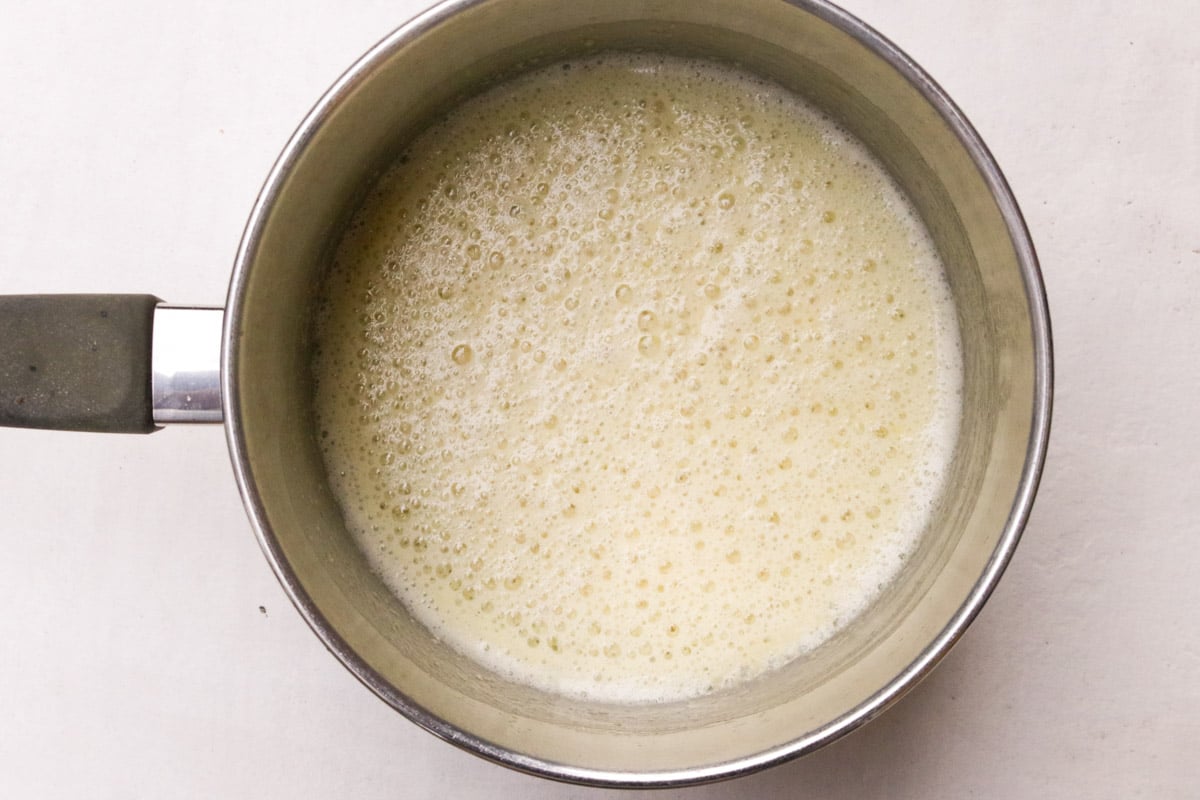
- MAKE THE SAUCE: Heat butter on medium heat in a medium – large pot (you will be adding the potatoes to the sauce later). Add garlic for a few seconds until fragrant. Stir in flour and cook about 2 minutes until light yellow. Slowly whisk in milk/cream and Dijon, salt, pepper, rosemary. Cook 4-5 minutes, stirring occasionally, until slightly thickened and it coats the back of a spoon. Remove pot from heat and stir in the cheeses until sauce is smooth and creamy.
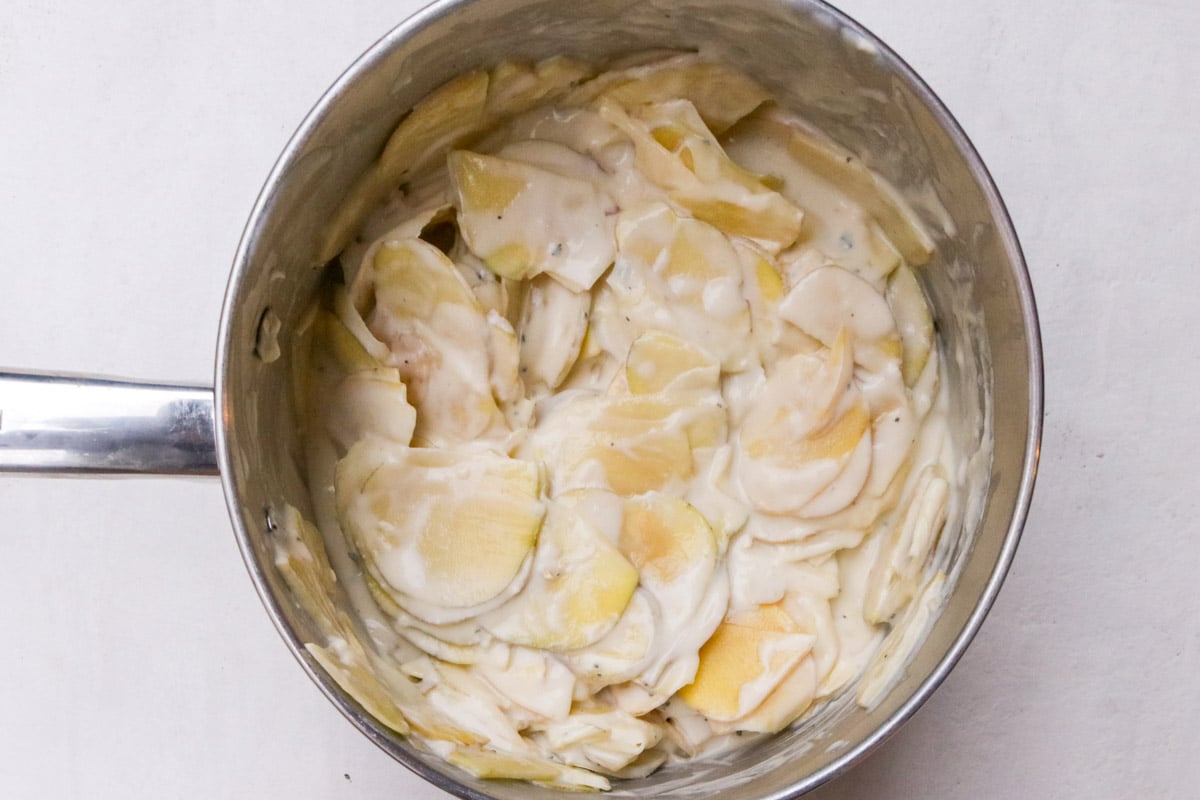
- COMBINE POTATOES AND SAUCE: Add the potatoes to the sauce in the pot and fold gently to coat the potatoes evenly. Pour into prepared baking dish.
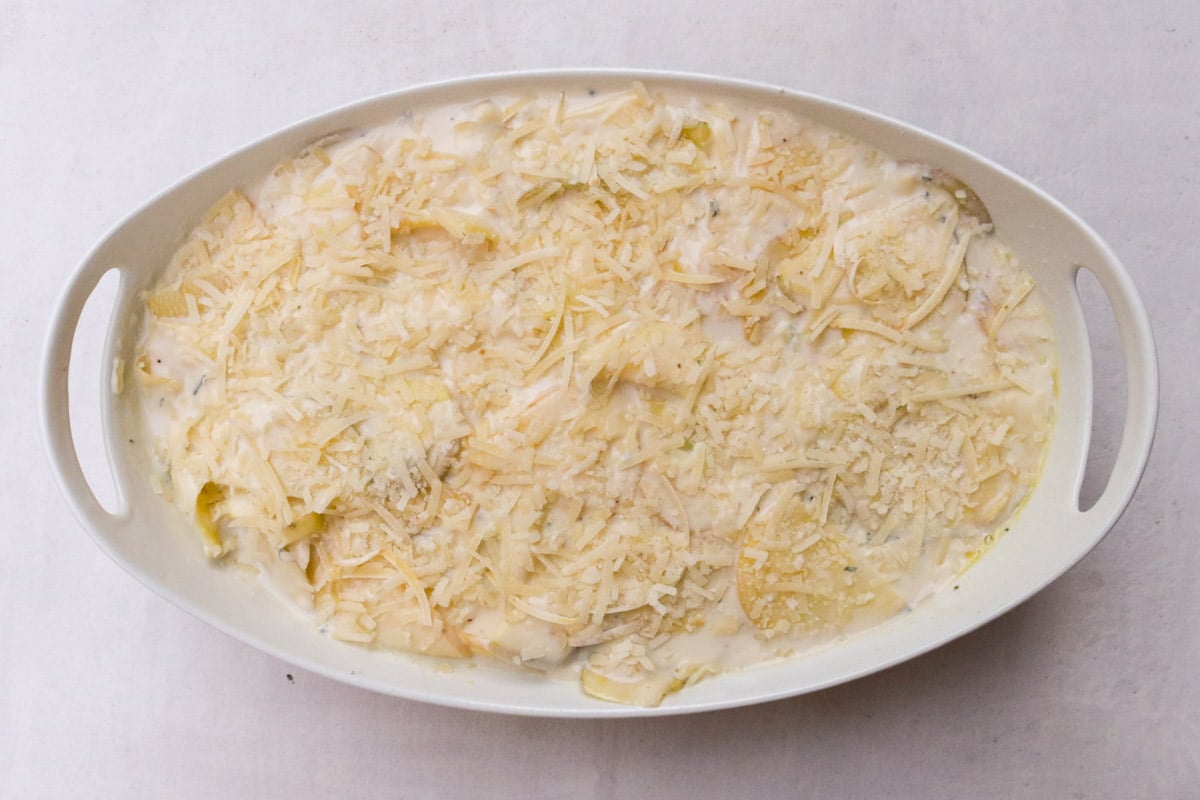
- BAKE: Top with Parmesan cheese (or Gruyere) for extra flavor and beautiful browning, or leave the top plain – potatoes will still brown, just less. Bake for 40-45 minutes. Check after 40 minutes. If a knife slips in with almost no resistance and the top is golden brown, it's done. If you skipped the Parmesan, you can broil for 2–3 minutes at the end for extra browning. Garnish with chopped green onions or fresh herbs if you like.
Recipe Notes
- Milk options: Any kind of milk will work. I suggest at least part of the liquid include a richer milk (like whole milk) or half-and-half cream.
- Cheese options: You can use all cheddar or a combination of white cheddar (or orange), Gruyère, Monterey Jack, Swiss, or Fontina. For a sharper taste, replace a bit of the cheese with Parmesan.
- Parmesan options: Sprinkling parmesan as a topping creates a lovely, flavorful, browned topping but you can skip it altogether or use Gruyère or cheddar on top instead.
- Variations:
- Seasoning: Try fresh thyme or chives instead of rosemary. Add a pinch of nutmeg or smoked paprika to the sauce.
- Lighter calorie options:
- Use part vegetable or chicken broth and part milk for the sauce.
- Reduce the cheese slightly.
- Swap some of the cheese with a part-skim or reduced-fat cheese. Blend it with some regular cheese so the sauce doesn’t become grainy (lower-fat cheeses tend to melt less smoothly).
- Make ahead, storage & reheating:
- 2 days ahead: Bake the scalloped potatoes, cool completely and refrigerate for up to 2 days. To reheat, let the potatoes come to room temperature for 30 minutes, then cover and bake at 350F/177C for about 30 minutes or until heated through. Uncover for the last 10 minutes.
- Freezing is not recommended as the cheese can separate, but it is possible – cover well and freeze for up to 2 months. Defrost before reheating.
- Store leftover potatoes in an airtight container for 2-3 days.